
Unleash Your Potential: Best Smartwatches for Fitness Tracking
Find the perfect wearable to elevate your workouts and monitor your health with unparalleled accuracy and smart features.
Explore Top PicksKey Takeaways
- ✓ Accuracy is paramount: Heart rate, GPS, and step tracking are crucial for effective fitness monitoring.
- ✓ Battery life varies significantly: Some last days, others weeks, impacting user convenience.
- ✓ Ecosystem integration matters: Compatibility with your smartphone and other apps enhances the experience.
- ✓ Advanced metrics offer deeper insights: Features like ECG, SpO2, and sleep tracking provide comprehensive health data.
How It Works
Determine if you prioritize running, swimming, weightlifting, or general health. Different smartwatches excel in specific activity tracking.
Consider GPS accuracy, heart rate monitoring, battery life, water resistance, and smart notifications. Match these to your daily routine and workout intensity.
Ensure compatibility with your smartphone (iOS/Android) and comfort for all-day wear. A comfortable watch is one you'll actually use consistently.
Research leading smartwatches like Apple Watch, Garmin, Fitbit, and Samsung Galaxy Watch. Look at user reviews and expert analyses to make an informed decision.
The Evolution of Wearable Tech: Why Smartwatches Dominate Fitness Tracking
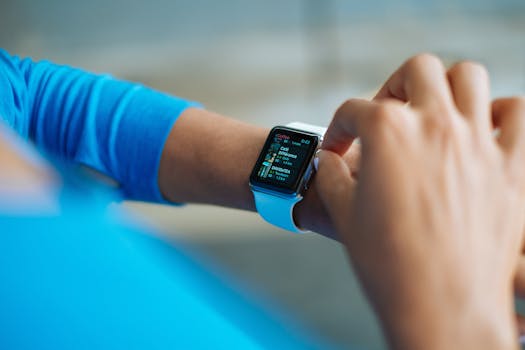 Photo: Pixabay / Pexels
Key Features Defining the Best Fitness Smartwatches
 Photo: Ketut Subiyanto / Pexels
Top Contenders: A Deep Dive into the Best Smartwatches for Fitness Tracking
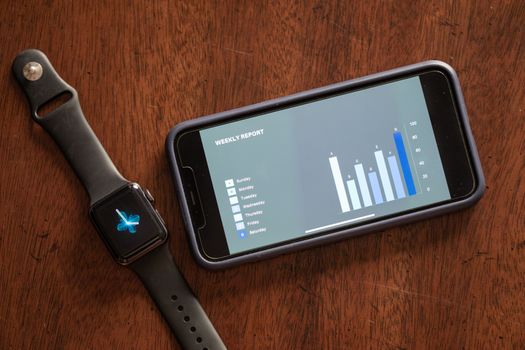 Photo: RDNE Stock project / Pexels
Optimizing Your Fitness Tracking: Tips and Common Mistakes
Photo: Pixabay / Pexels
Comparison
| Feature | Apple Watch Ultra 2 | Garmin Forerunner 965 | Samsung Galaxy Watch 6 Classic | Fitbit Sense 2 |
|---|---|---|---|---|
| OS Compatibility | iOS only | iOS & Android | Android (best with Samsung) | iOS & Android |
| Battery Life (typical) | Up to 36 hrs (72 low power) | Up to 23 days (31 GPS) | Up to 30 hrs | Up to 6 days |
| Advanced GPS | Dual-frequency GPS | Multi-band GPS | Built-in GPS | Built-in GPS |
| ECG & SpO2 | ✓ | ✗ | ✓ | ✓ |
| Body Composition Analysis | ✗ | ✗ | ✓ | ✗ |
| Ruggedness | MIL-STD-810H | MIL-STD-810G | IP68, 5ATM | 5ATM |
| Price Range (MSRP) | $799 | $599 | $399 | $299 |
What Readers Say
"My Apple Watch Ultra 2 has completely transformed my running. The GPS is incredibly accurate, and the recovery metrics help me push harder without overtraining. It truly is one of the best smartwatches for fitness tracking I've ever owned."
Sarah J. · Austin, TX"As an avid hiker and cyclist, the Garmin Fenix 7 Pro is unmatched. The battery life is insane, and the detailed mapping and performance stats are exactly what I need. It's built like a tank and handles any adventure."
Mark D. · Denver, CO"The Samsung Galaxy Watch 6 Classic helps me stay on top of my health. The body composition analysis is a game-changer for monitoring my fitness journey, and the sleep coaching has significantly improved my rest quality."
Jessica L. · Miami, FL"I appreciate the Fitbit Sense 2 for its focus on holistic health. The stress management tools and daily readiness score are fantastic, though I sometimes wish it had more robust third-party app support. Still, a solid choice for general wellness."
David R. · Chicago, IL"I needed a smartwatch that could keep up with my swimming and triathlons. My Garmin Forerunner 965 delivers exceptional multi-sport tracking and an incredible amount of data. It's definitely one of the best smartwatches for fitness tracking for serious athletes."
Emily S. · Seattle, WAFrequently Asked Questions
What is the most accurate smartwatch for heart rate monitoring during exercise?
While no optical heart rate sensor is 100% perfect, devices like the Apple Watch Ultra 2 and Garmin Forerunner series are consistently rated highly for accuracy, especially during steady-state cardio. Factors like fit and skin tone can still influence readings, so ensuring a snug fit is crucial for optimal performance.
Will a fitness smartwatch help me lose weight?
A fitness smartwatch is a powerful tool to support weight loss by providing data on calorie burn, activity levels, and sleep patterns. It can help you stay accountable and make informed decisions about your diet and exercise. However, it's a tool, not a magic solution; consistent effort and a healthy lifestyle are still essential.
How do I ensure my smartwatch's GPS is accurate for outdoor activities?
To ensure accurate GPS, make sure your watch has a clear line of sight to the sky. Calibrating your device by performing a few outdoor walks or runs with your phone (if recommended by the manufacturer) can also help. Keeping your watch's software updated will also ensure optimal GPS performance.
Are expensive smartwatches always better for fitness tracking?
Not necessarily. While higher-priced models often offer more advanced sensors (ECG, SpO2, temperature), premium materials, and longer battery life, a mid-range smartwatch might perfectly suit your needs if you primarily focus on basic activity tracking, heart rate, and sleep. Evaluate features against your specific fitness goals.
How do fitness smartwatches compare to dedicated fitness trackers?
Fitness smartwatches offer a broader range of 'smart' features beyond just fitness, such as notifications, calls, music control, and app ecosystems. Dedicated fitness trackers typically focus solely on health metrics, often with simpler displays and longer battery life, and are generally more affordable. Smartwatches provide a more holistic daily companion.
Who should invest in the best smartwatches for fitness tracking?
Anyone serious about understanding and improving their health and fitness can benefit. This includes athletes looking for performance optimization, individuals aiming for weight loss, those managing chronic conditions (with doctor consultation), or anyone seeking a more active lifestyle and detailed insights into their daily well-being.
Can fitness smartwatches detect medical conditions?
While some smartwatches have FDA-cleared features like ECG for detecting atrial fibrillation or SpO2 for blood oxygen levels, they are not medical devices and should not be used for self-diagnosis or to replace professional medical advice. They can provide alerts for potential issues, prompting users to seek medical attention.
What future trends can we expect in smartwatches for fitness tracking?
Future trends include even more advanced biometric sensors (e.g., non-invasive glucose monitoring), enhanced AI for personalized coaching, longer battery life, deeper integration with smart home ecosystems, and potentially even more robust mental health tracking. Miniaturization and improved comfort will also continue to be key areas of innovation.
Choosing among the best smartwatches for fitness tracking is a personal journey, aligning cutting-edge technology with your unique health and wellness aspirations. Don't just track your progress; understand it, optimize it, and achieve your peak performance. Discover the perfect fitness companion today and take the next step in your health revolution.