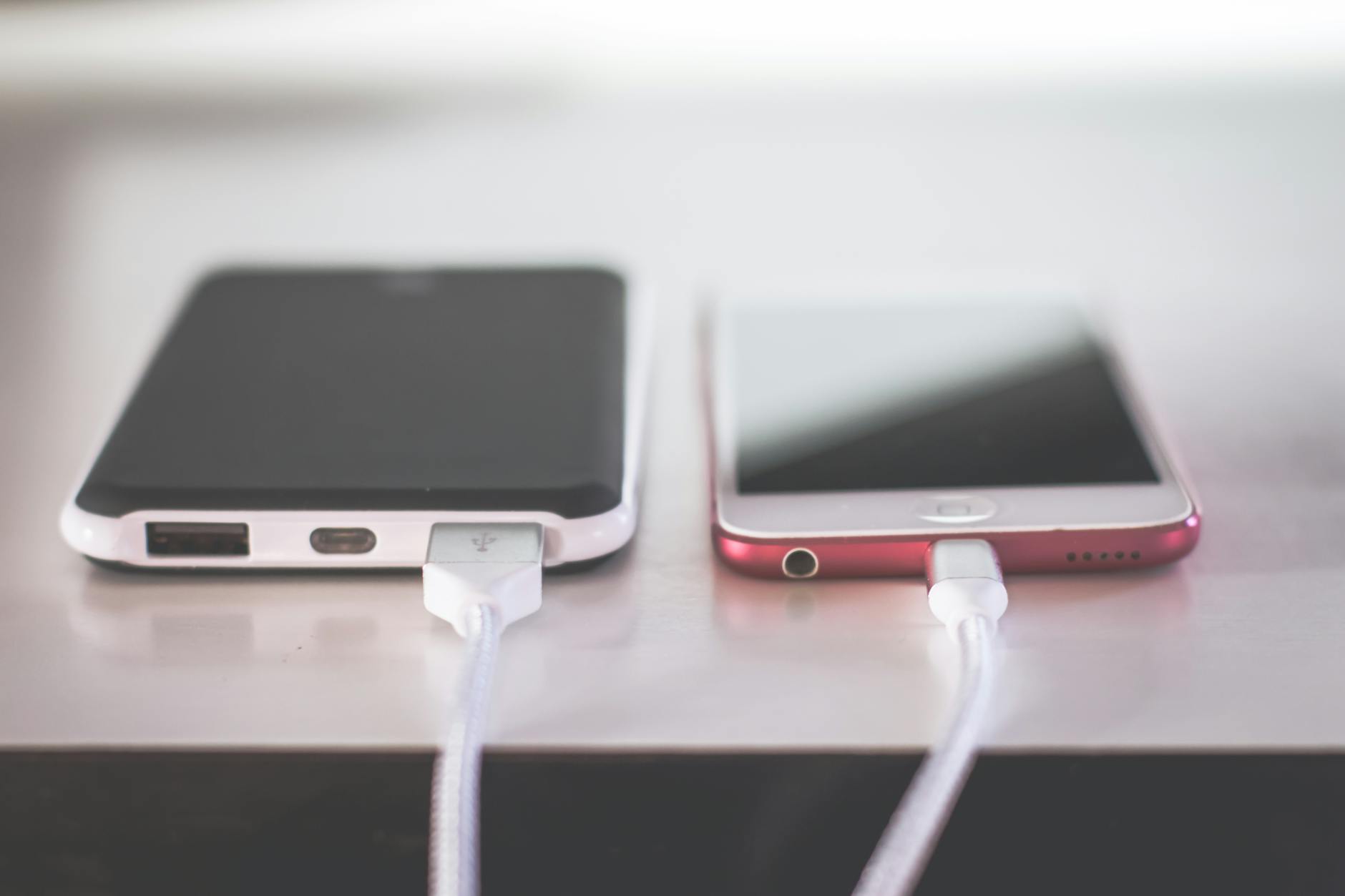
Why buy portable power bank for travel? Stay Charged!
buy portable power bank for travel

Why buy portable power bank for travel? Stay Charged!

Ensure your essential devices never run out of power, keeping you connected and entertained on every journey.

Find Your Perfect Power Bank

Key Takeaways

  • ✓ Most airlines restrict power banks over 100Wh to carry-on luggage only.
  • ✓ Capacity is measured in milliampere-hours (mAh); higher mAh means more charges.
  • ✓ Fast charging technologies like Power Delivery (PD) and Quick Charge (QC) significantly reduce charging times.
  • ✓ Always check the input and output ports (USB-A, USB-C) for compatibility with your devices.

How It Works

1
Understand Your Needs

Assess how many devices you carry and how often they need charging. This determines the necessary capacity and number of ports.

2
Compare Specifications

Look at capacity (mAh), output wattage (for charging speed), and port types. Ensure it meets airline regulations for travel.

3
Consider Portability & Durability

Choose a size and weight that suits your travel style. Opt for robust designs if you're an adventurous traveler.

4
Make Your Purchase & Enjoy

Select a reputable brand and model based on reviews and features. Pack it in your carry-on and stay powered throughout your trip.

The Indispensable Travel Companion: Why You Need a Portable Power Bank

A smartphone connected to a charger lying on a wooden table indoors. Photo: Hasan Albari / Pexels
In an increasingly digital world, staying connected is not just a convenience; it's often a necessity, especially when you travel. From navigating unfamiliar streets with your smartphone's GPS to capturing breathtaking moments with your camera, or simply staying in touch with loved ones, our devices are integral to the modern travel experience. Imagine this common scenario: you’re in the middle of an exciting city, trying to find your next destination, and your phone battery suddenly dies. Or perhaps you’re on a long-haul flight, deeply engrossed in a movie on your tablet, only for the low battery warning to flash. These frustrating moments underscore the critical need to buy portable power bank for travel. A portable power bank, essentially an external battery, acts as your mobile charging station, ensuring that your gadgets remain powered up regardless of your proximity to an electrical outlet. It's more than just a backup; it's peace of mind, allowing you to explore without the constant anxiety of a dwindling battery life. For the modern traveler, this device is as crucial as your passport or wallet. It frees you from the hunt for wall sockets in airports, cafes, or hotel lobbies, giving you the autonomy to charge on the go. This means less time tethered to a fixed location and more time experiencing your journey. Beyond just phones, modern travelers often carry a suite of devices: smartwatches, e-readers, wireless headphones, portable speakers, and even small laptops. A robust power bank can cater to several of these, making it an invaluable asset. When you buy portable power bank for travel, you're investing in uninterrupted navigation, entertainment, communication, and photography. Consider emergency situations, too. A dead phone in an unfamiliar place can be a safety hazard. Having a charged power bank means you can always make an emergency call, access vital information, or signal for help. It's a small device that offers significant security and convenience. Furthermore, with the rise of digital boarding passes, mobile payment systems, and travel apps, your smartphone has become your all-in-one travel assistant. A dead battery can derail your plans, from missing a flight to being unable to pay for a taxi. A power bank mitigates these risks, making your travels smoother and more enjoyable. It’s an essential piece of travel tech that every globetrotter should consider.

Decoding the Specs: What to Look for When Choosing Your Travel Power Bank
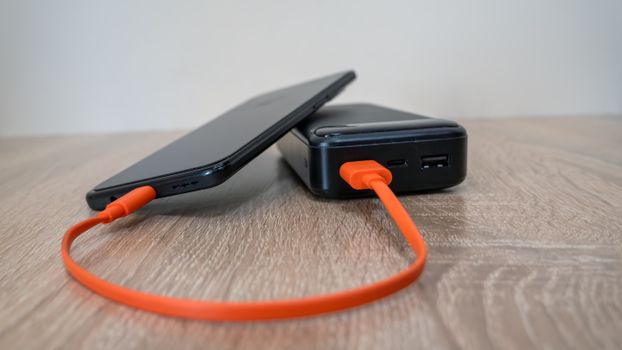
A smartphone charging via an orange cable connected to a power bank on a wooden surface. Photo: Eleonora Vokueva / Pexels
When you decide to buy portable power bank for travel, the sheer variety of options can be overwhelming. To make an informed decision, it’s crucial to understand the key specifications that differentiate one power bank from another. The most important metric is capacity, measured in milliampere-hours (mAh). This indicates how much power the bank can store. For a smartphone, 5,000 mAh might provide one full charge, while 10,000 mAh could offer two, and 20,000 mAh often supplies four or more. Your ideal capacity depends on how many devices you plan to charge and how frequently. For a weekend trip with just a phone, 10,000 mAh might suffice. For longer journeys or multiple devices, 20,000 mAh or higher is recommended. However, be mindful of airline regulations: most restrict power banks over 27,000 mAh (100 Wh) in carry-on luggage, and they are almost universally banned from checked bags due to fire risk. Always check the Watt-hour (Wh) rating, which is often printed on the power bank, to ensure compliance. Next, consider the output ports and charging speed. Most modern power banks offer both USB-A and USB-C ports. USB-A is the traditional rectangular port, while USB-C is the newer, reversible, and more versatile standard. For fast charging, look for technologies like Power Delivery (PD) via USB-C and Quick Charge (QC) via USB-A. PD is especially important for charging larger devices like tablets and even some laptops, as it can deliver higher wattages (e.g., 18W, 30W, 45W, or even 60W+). A power bank with at least an 18W PD output will significantly speed up the charging of most modern smartphones and tablets. Input charging speed is also important – how quickly can the power bank itself be recharged? A power bank that takes 10 hours to recharge after a trip isn't as convenient as one that recharges in 3-4 hours with a fast charger. Look for power banks that support PD input for quicker replenishment. Finally, don't overlook physical attributes. Size and weight are critical for portability. A compact, lightweight power bank is ideal for backpacking or minimalist travel, while a heavier, higher-capacity unit might be better suited for car trips or when you have more luggage space. Durability is another factor. If you're an adventurous traveler, opt for rugged, water-resistant models that can withstand drops and splashes. Some power banks also come with additional features like built-in cables, LED flashlights, or even solar charging panels (though solar charging is typically very slow and best used for topping off, not full charges). Assessing these features against your specific travel habits will guide you to the perfect device when you decide to buy portable power bank for travel.

Maximizing Your Investment: Tips for Using and Maintaining Your Travel Power Bank

A smartphone charging via an orange cable connected to a power bank on a wooden surface. Photo: Eleonora Vokueva / Pexels
Once you buy portable power bank for travel, knowing how to use it effectively and maintain it properly will ensure you get the most out of your investment and extend its lifespan. The first rule of thumb is always to fully charge your power bank before you embark on any trip. There's nothing more frustrating than packing your charger only to realize it's empty when you need it most. Use a wall adapter that matches or exceeds the power bank's input charging speed for the quickest recharge. For instance, if your power bank supports 18W PD input, use an 18W or higher PD wall charger. This ensures the power bank itself is ready to go when you are. When charging your devices, prioritize. If you have multiple gadgets, decide which ones are most critical. Your phone for navigation and communication, perhaps, followed by your e-reader for entertainment. Many power banks have multiple output ports, allowing you to charge more than one device simultaneously. However, be aware that splitting the power output can sometimes slow down the charging speed for each individual device. If you need rapid charging for a specific gadget, use the highest-wattage port available and avoid charging other devices concurrently. Always use high-quality cables. Cheap, flimsy cables can significantly reduce charging efficiency and even damage your devices or the power bank itself. Invest in durable, MFi-certified (for Apple devices) or reputable brand cables that support fast charging protocols like PD or QC, if your power bank and device do. Proper storage and maintenance are key to longevity. Store your power bank in a cool, dry place, away from direct sunlight and extreme temperatures. Heat is particularly detrimental to battery health. Avoid fully discharging the power bank regularly; lithium-ion batteries prefer to be kept between 20% and 80% charge. While modern power banks have protection circuits to prevent overcharging and deep discharge, adhering to these general battery care principles can prolong its life. If you're not using it for an extended period, charge it to about 50-60% before storing it. Periodically, every few months, fully charge and then partially discharge it to keep the battery cells active. When traveling, always pack your power bank in your carry-on luggage, never in checked baggage, due to aviation safety regulations regarding lithium-ion batteries. Keep it in a protective pouch to prevent scratches or accidental drops. By following these simple tips, your decision to buy portable power bank for travel will pay dividends for many adventures to come, ensuring you remain powered and productive on the go.

Common Pitfalls to Avoid When Buying and Using a Travel Power Bank
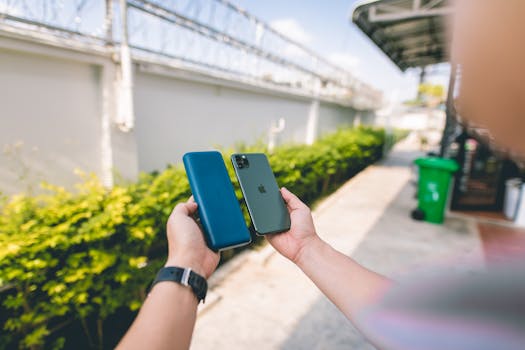
Close-up of a smartphone and power bank held in hands in an outdoor setting. Photo: I'm Zion / Pexels
While the benefits of owning a portable power bank for travel are undeniable, several common mistakes can diminish its utility or even pose safety risks. Avoiding these pitfalls is crucial for a smooth and safe travel experience. One of the most frequent errors is underestimating capacity. Many travelers buy a power bank with insufficient mAh, only to find it can barely provide one full charge for their primary device. Always calculate your needs based on the number of devices and their battery sizes, aiming for a power bank that can provide at least 2-3 full charges for your most-used gadget. Conversely, buying an excessively large power bank (e.g., 50,000 mAh+) might seem appealing for maximum power, but these are often heavy, bulky, and, more importantly, may exceed airline carry-on limits (typically 27,000 mAh or 100Wh). Always check the Watt-hour rating and airline policies before purchasing. Another common mistake is neglecting charging speeds and port compatibility. Some budget power banks might offer high capacity but only provide slow 5W (1A) charging output, which can take hours to charge a modern smartphone. Always look for power banks with Power Delivery (PD) via USB-C and/or Quick Charge (QC) via USB-A for rapid charging. Similarly, ensure the output ports match your devices. If you only have USB-C devices, a power bank with only USB-A outputs will be useless. Don't forget about input charging speed for the power bank itself; a high-capacity power bank that takes 12 hours to recharge is impractical. Safety is paramount, and a significant pitfall is purchasing unbranded or suspiciously cheap power banks from unknown sources. These often use low-quality battery cells, lack proper safety certifications (like UL or CE), and can be prone to overheating, short-circuiting, or even catching fire. Always opt for reputable brands known for their quality and safety standards. Furthermore, improper storage and use can lead to issues. Leaving a power bank in direct sunlight, in a hot car, or exposing it to moisture can damage its internal components and pose a fire hazard. Never store or use a power bank if it appears swollen, is leaking, or smells unusual. These are signs of a failing battery and it should be safely disposed of. Lastly, failing to pack your power bank in your carry-on luggage is a common oversight. Lithium-ion batteries are strictly prohibited in checked baggage by all airlines due to fire risks. Always keep it with you in the cabin. By being mindful of these common errors, your decision to buy portable power bank for travel will result in a safe, efficient, and reliable power source for all your adventures.

Comparison

FeatureAdventure Traveler (Rugged)Business Traveler (Compact)Family Traveler (High Capacity)
Capacity (mAh)10,000 - 20,0005,000 - 10,00020,000 - 27,000
Charging SpeedFast (PD/QC)Fast (PD/QC)Fast (PD/QC)
PortsUSB-C PD, USB-AUSB-C PD, USB-AMultiple USB-C PD, USB-A
DurabilityRugged, Water-resistantSleek, Durable casingStandard, Reliable
Weight/SizeModerate, robust buildLightweight, pocketableHeavier, larger
Extra FeaturesFlashlight, CarabinerPass-through chargingLED display, Multi-device charging
Airline Carry-on Limit✓ (check Wh)

What Readers Say

"I bought a portable power bank for travel for my trip to Europe, and it was a lifesaver! My phone never died, even with constant navigation and photo taking. Highly recommend for any international traveler."

Sarah J. · Denver, CO

"This power bank is fantastic. It charges my iPhone 13 Pro three times over and is compact enough for my backpack. Definitely the best decision to buy portable power bank for travel for my hiking trips."

Mark T. · Austin, TX

"I used to constantly search for outlets at airports. After I decided to buy portable power bank for travel, those days are over! My tablet and phone stay charged through long layovers and flights, making travel so much less stressful."

Emily R. · Miami, FL

"The power bank works great, provides multiple charges for my devices and charges quickly. My only minor complaint is its weight, but for the capacity, it's a fair trade-off. Essential for my business trips."

David L. · Seattle, WA

"As a digital nomad, a reliable power source is non-negotiable. This power bank keeps my laptop, phone, and headphones charged all day. It's truly indispensable, and I'm so glad I decided to buy portable power bank for travel."

Jessica M. · Chicago, IL

Frequently Asked Questions

What capacity (mAh) should I look for when I buy portable power bank for travel?

For most travelers, a power bank with 10,000mAh to 20,000mAh is ideal. 10,000mAh typically provides 2-3 full phone charges, while 20,000mAh can offer 4-6 charges or power larger devices like tablets. Consider your specific devices and trip duration to determine the best capacity.

Are portable power banks allowed in carry-on luggage?

Yes, portable power banks are generally allowed only in carry-on luggage, not in checked bags, due to aviation safety regulations regarding lithium-ion batteries. Most airlines permit power banks up to 100 Watt-hours (Wh), which typically translates to around 27,000mAh. Always check your airline's specific policies before flying.

How do I choose a power bank with fast charging capabilities?

Look for power banks that support Power Delivery (PD) via USB-C ports and/or Quick Charge (QC) via USB-A ports. These technologies significantly reduce charging times for compatible devices. Check the output wattage (e.g., 18W, 30W) – higher wattage generally means faster charging.

Is it worth spending more on a premium brand power bank?

Yes, generally, it is worth investing in a reputable brand when you buy portable power bank for travel. Premium brands often use higher-quality battery cells, incorporate advanced safety features to prevent overcharging and short-circuits, and offer better warranty support, ensuring reliability and safety.

How does a portable power bank compare to a solar charger for travel?

Portable power banks store energy from a wall outlet, offering reliable, fast charging on demand. Solar chargers, while eco-friendly, are typically much slower and highly dependent on direct sunlight, making them less practical for primary charging needs but potentially useful for topping off in remote areas.

Who benefits most from deciding to buy portable power bank for travel?

Anyone who relies on electronic devices while away from consistent power sources will benefit. This includes frequent flyers, backpackers, campers, business travelers, students, and anyone wanting peace of mind that their phone, tablet, or other gadgets won't die during critical moments or long periods away from an outlet.

What are the safety risks associated with portable power banks?

The primary risks are overheating, short-circuiting, and in rare cases, fire, usually due to manufacturing defects, physical damage, or using uncertified, low-quality products. Always buy from reputable brands, avoid physical damage, and never use a power bank that appears swollen or damaged.

What's the future trend for portable power banks for travel?

Future trends include smaller, lighter designs with higher energy density, increased integration of GaN (Gallium Nitride) technology for more efficient power delivery, broader adoption of USB-C PD with higher wattage outputs for laptops, and potentially wireless charging arrays for multiple devices.

Don't let a dead battery derail your next adventure. Take control of your power needs and experience seamless travel. Ready to buy portable power bank for travel? Explore our recommendations and make the smart choice for uninterrupted connectivity and peace of mind on every journey.

Topics: buy portable power bank for travelbest travel chargerportable phone chargerexternal battery packtravel tech essentials
Leo List

IE Escorts NO Escorts US Escorts NZ Escorts AU Escorts
Brampton weed
Adultwork EstrelaBet Vai de Bet R7 Bet Betão Galera Bet Rainbet Bet9ja Shop SportyBet BetKing Sisal Loto Foot Hollywoodbets YesPlay Odibets RushBet Jugabet BetWarrior BetCity MSport betPawa Fortebet