Seamless Car Rental Germany Train Station Pickups
June 24, 2026 15 min read 2,964 words
Unlock the freedom of German roads right from your arrival, with expert guidance for hassle-free car rental at any major train station.
Book Your German Ride
Navigating Car Rental at Major German Train Stations
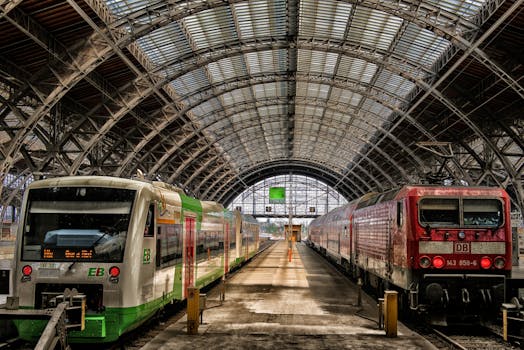 Photo: Wolfgang Weiser / Pexels
Germany's extensive and highly efficient train network, Deutsche Bahn (DB), is a cornerstone of European travel, connecting cities, towns, and even remote regions with remarkable precision and speed. For many travelers, arriving by train at a major German city like Berlin, Munich, Frankfurt, or Hamburg is the first step in their journey. However, while the trains are excellent for inter-city travel, exploring the picturesque countryside, charming smaller towns, or specific business locations often necessitates the flexibility and independence that only a rental car can provide. This is where the strategic advantage of picking up a
car rental Germany train station becomes incredibly clear. Instead of navigating city traffic to an off-site rental office or relying on public transport to reach a distant airport, you can seamlessly transition from train to car, often within the same building or a short walk away. Major train stations, known as 'Hauptbahnhof' (Hbf), are designed as central transportation hubs, integrating not just train platforms but also bus terminals, taxi stands, and, crucially, car rental agencies. Companies like Sixt, Europcar, Hertz, Avis, and Enterprise maintain a significant presence at these key locations, offering a wide array of vehicles to suit every need, from compact city cars to spacious family vans or luxurious executive sedans. The sheer convenience of stepping off your train, completing a quick check-in at a nearby counter, and then heading directly to your waiting vehicle in an adjacent parking garage cannot be overstated. This eliminates wasted time, reduces stress, and allows you to begin your German adventure or business trip without delay. Understanding the layout of these stations and the specific procedures for rental car pickup is vital for a smooth experience. Each station might have slight variations, but the general principle of integrated services holds true. Many rental companies offer digital check-in or express pickup services, further streamlining the process for those who have pre-booked. This article delves deep into optimizing this transition, ensuring you're well-prepared for a hassle-free start to your German road trip. It's not just about convenience; it's about maximizing your travel efficiency and enjoyment from the moment you arrive. The integration of car rental services directly within or immediately adjacent to German train stations represents a sophisticated approach to multimodal transportation, reflecting Germany's commitment to efficiency and visitor convenience. Whether you're planning to explore the Black Forest, drive the Romantic Road, visit a specific trade fair, or simply need wheels for local excursions, picking up your rental car directly at the train station is often the most logical and least cumbersome option. This strategic placement ensures that your journey from public transport to personal vehicle is as smooth and quick as possible, setting the tone for an enjoyable and productive stay in Germany.
Essential Preparations for Your German Car Hire
Before you even step foot on a train bound for Germany, meticulous preparation is the key to a stress-free car rental experience. The first and most critical step is booking your car in advance. Germany is a popular destination, and rental car availability, especially for specific vehicle types or during peak travel seasons (summer, holidays, major festivals), can be limited. Booking several weeks, or even months, ahead not only guarantees you a vehicle but often secures better rates. Utilize reputable international booking platforms or directly visit the websites of major rental companies like Sixt, Hertz, Europcar, Avis, and Enterprise. When booking, be precise about your pickup location – clearly specify the exact train station (e.g., 'Frankfurt Hbf' rather than just 'Frankfurt') to avoid any confusion upon arrival. Next, gather all necessary documentation. You will absolutely need a valid driver's license from your home country. For US citizens, while an International Driving Permit (IDP) is not legally required by German law if your US license is in English and readable, it is highly recommended by the ADAC (Germany's automobile club) and can be requested by some rental agencies or local authorities in certain situations. It serves as an official translation and can prevent misunderstandings. Obtain one from AAA or AATA before you travel. You’ll also need your passport for identification and a major credit card in the primary driver's name for the security deposit. Debit cards are generally not accepted for deposits. Carefully review the terms and conditions of your rental agreement, paying close attention to insurance coverage options. Standard rental agreements often include basic liability insurance, but supplemental coverage for collision damage waiver (CDW) or theft protection (TP) might be advisable. Understand deductibles and what is covered versus what is excluded. Consider whether your personal car insurance or credit card benefits offer any coverage that might make additional rental company insurance redundant. Fuel policies are another important aspect: 'full-to-full' is generally the most economical option, requiring you to return the car with a full tank. Familiarize yourself with German road rules and signs before you arrive. This includes understanding Autobahn regulations (no speed limit in certain sections, but minimum speeds apply), right-of-way rules, and specific signage for environmental zones ('Umweltzonen') which require a special sticker. Many German cities, including their train station areas, are within these zones. Your rental car should already have the necessary green sticker, but it's always wise to confirm. Finally, consider any additional equipment you might need, such as a GPS (though most smartphones suffice), child safety seats, or winter tires if traveling during colder months. Specifying these when booking ensures they are available upon pickup. Being thoroughly prepared means you can focus on enjoying your German journey rather than dealing with unexpected complications.
You may also find Rental Car Germany useful.
Pickup Day: From Platform to Pavement
The day you arrive at your chosen German train station for car rental pickup is when all your careful planning comes to fruition. As your train pulls into the station, take a moment to confirm your arrival platform and mentally prepare for the transition. Major German train stations are typically well-signposted, often in multiple languages, making navigation relatively straightforward. Look for signs indicating 'Mietwagen' (rental cars) or the logos of specific rental companies like Sixt, Hertz, or Europcar. In larger stations, rental desks are often consolidated into a dedicated 'Mietwagenzentrum' (rental car center) or found within the main concourse. In smaller stations, they might be located just outside the main building or in an adjacent annex. If you have difficulty, don't hesitate to ask a station employee or use the station's information points. Once you locate your rental agency's desk, have all your pre-prepared documents ready: your valid driver's license, passport, credit card (in the primary driver's name), and your booking confirmation. The rental agent will process your paperwork, verify your identity, and explain the rental agreement in detail. This is your opportunity to ask any last-minute questions about the car, insurance, or specific station procedures. Pay close attention to the fuel policy and the return instructions, including the exact return location for the vehicle. Many agencies offer digital check-in or express services for pre-booked customers, which can significantly reduce your wait time. If available, utilize these options to streamline the process. After completing the paperwork, you'll be directed to the car's location. This is often in an underground parking garage directly beneath or adjacent to the train station. Before driving off, perform a thorough inspection of the vehicle. Walk around the entire car, noting any existing scratches, dents, or damage, both inside and out. Compare these with the damage report provided by the rental agency. If you spot any discrepancies, immediately point them out to a rental agent and ensure they are documented before you leave. Take photos or videos on your phone as additional proof. Check that all lights, mirrors, and wipers are functioning correctly. Familiarize yourself with the car’s controls, including how to operate the lights, indicators, air conditioning, and the infotainment system. Ensure you know how to engage reverse gear and locate the fuel cap release. German cars can sometimes have slightly different layouts or features than what you might be accustomed to, so a quick run-through can save you hassle later. Finally, plot your initial route using your GPS or smartphone, ensuring you understand the first few turns to confidently navigate out of the station area and onto the open road. This careful attention to detail ensures a smooth departure and a confident start to your German journey. For more specific advice on navigating German roads, consider checking out
this guide on European driving etiquette.
Optimizing Your Car Rental Germany Train Station Experience: Tips & Common Mistakes
To truly optimize your car rental experience from a German train station, a few key strategies and an awareness of common pitfalls can make all the difference.
**Tips for a Seamless Experience:**
* **Early Bird Gets the Best Car:** As mentioned, booking well in advance is paramount. Not only does it secure a better rate, but it also increases the likelihood of getting your preferred vehicle class. Last-minute bookings, especially at train stations, often mean limited choices and higher prices.
* **Leverage Loyalty Programs:** If you frequently rent cars, joining loyalty programs with major agencies can offer benefits like expedited service, free upgrades, or even discounted rates. These programs are particularly useful at busy train stations where speed and efficiency are valued.
* **Understand Fuel Policies:** Opt for a 'full-to-full' fuel policy. It's almost always the most cost-effective. Document the fuel level with a photo when you pick up the car and ensure you return it full to avoid exorbitant refueling charges from the agency.
* **Check for Additional Drivers:** If multiple people will be driving, ensure they are all registered on the rental agreement. Unregistered drivers invalidate insurance coverage, leading to significant financial risk.
* **Pre-Pay Tolls/Vignettes:** While Germany's Autobahns are largely toll-free for passenger cars, some specific routes or tunnels might have charges. Research your route or ask the rental agent. For travel into neighboring countries, you might need a 'Vignette' (toll sticker), which you should purchase at border crossings or gas stations before entering the country.
* **Return Location Flexibility:** Sometimes, returning the car to a different train station or even an airport within Germany can be more convenient. Check for one-way rental fees during booking, as these can vary significantly.
**Common Mistakes to Avoid:**
* **Ignoring the Inspection:** Skipping the pre-rental vehicle inspection is a major error. Any damage not documented before you leave could be attributed to you upon return, resulting in unexpected charges.
* **Overlooking Insurance Details:** Assuming your personal insurance or credit card covers everything can be a costly mistake. Understand exactly what is covered and what your deductible is. Consider supplemental insurance if you're uncomfortable with the default coverage.
* **Not Understanding German Road Rules:** Driving in Germany requires adherence to specific rules, including speed limits (even on the Autobahn, sections are restricted), right-of-way, and environmental zone requirements. Ignorance is no excuse for fines or accidents.
* **Underestimating Parking:** Parking in German cities, especially near train stations, can be challenging and expensive. Research parking options at your destination in advance, looking for public garages ('Parkhaus') or hotel parking. Avoid parking illegally, as fines are swift and substantial.
* **Returning Late or Early:** Late returns can incur additional daily charges, sometimes at a higher rate. Early returns generally do not result in a refund for unused time. Stick to your booked schedule as closely as possible.
* **Failing to Document Return Condition:** Just as with pickup, take photos or video of the car's condition and the fuel gauge upon return. This provides proof in case of later disputes about damage or fuel levels. Get a return receipt confirming no new damage was found.
By being proactive and informed, your experience with car rental at a German train station can be a smooth and enjoyable part of your overall journey, offering the freedom to explore Germany on your own terms.