Explain Quantum Computing Simply: The Future is Here
July 22, 2026 14 min read 2,831 words
Unlock the mysteries of quantum computing and discover how this revolutionary technology is poised to reshape our world.
Start Your Quantum Journey
Understanding the Core Concepts of Quantum Mechanics Computing
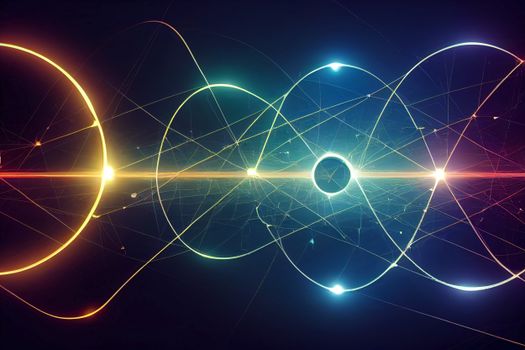 Photo: Merlin Lightpainting / Pexels
To truly explain quantum computing simply, we must first grapple with the fundamental principles that underpin it: superposition, entanglement, and interference. These aren't just fancy terms; they are the bedrock upon which this revolutionary technology stands, differentiating it profoundly from the classical computing we've known for decades. Imagine a light switch. In a classical computer, a bit is like that switch: it's either ON (1) or OFF (0). There's no in-between. Now, imagine a dimmer switch that can be 0, 1, or any intensity in between, and potentially all at once. This is a simplified way to think about superposition. A quantum bit, or qubit, doesn't have to commit to being a 0 or a 1 until it's measured. It can exist in a probabilistic combination of both states simultaneously. This ability to hold multiple possibilities at once is what gives quantum computers their immense parallel processing power. Instead of checking one path at a time, they can explore countless paths simultaneously. For instance, if you have two qubits in superposition, they can represent four possible combinations (00, 01, 10, 11) at the same time. Add another qubit, and it doubles again to eight combinations. This exponential growth in information storage and processing capability is what makes quantum computing so powerful for complex problems that overwhelm classical machines.
This fundamental difference is crucial to grasping its potential. Entanglement is perhaps the most mind-bending aspect of quantum mechanics. When two or more qubits become entangled, they become intrinsically linked, no matter how far apart they are. The state of one instantly affects the state of the other(s). It's as if they share a secret, instantaneous connection that defies classical physics. Albert Einstein famously called this 'spooky action at a distance.' In the context of quantum computing, entanglement allows for highly correlated operations across multiple qubits, which can significantly speed up certain types of calculations. Imagine trying to solve a puzzle where pieces are scattered across different rooms, but when you change one, its entangled partner in another room instantly changes too, helping you find a solution much faster. This interconnectedness is not just a curiosity; it's a computational resource that algorithms can leverage. Finally, interference is how quantum computers find the right answer amidst all the possibilities generated by superposition and entanglement. Think of waves in water. When two waves meet, they can either reinforce each other (constructive interference) or cancel each other out (destructive interference). Quantum algorithms are designed to manipulate the probabilities of different outcomes in such a way that the correct answers interfere constructively, becoming more probable, while incorrect answers interfere destructively, becoming less probable. When the computation is complete, a measurement is performed, and the high-probability correct answer is revealed. This intricate dance of superposition, entanglement, and interference is what allows quantum computers to tackle problems that are intractable for even the most powerful supercomputers today, opening doors to previously unimaginable scientific and technological advancements. These principles represent a paradigm shift in how we approach computation, moving from deterministic, bit-by-bit operations to probabilistic, quantum-state manipulations.
The Landscape of Quantum Computing: Hardware and Software
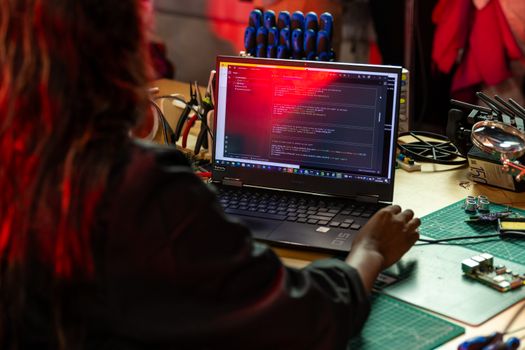 Photo: ThisIsEngineering / Pexels
Delving deeper into how to explain quantum computing simply also requires an understanding of the diverse hardware implementations and the nascent but rapidly evolving software ecosystem. Unlike classical computers, which largely rely on silicon-based transistors, quantum computers are being built using a variety of exotic technologies, each with its own strengths and challenges. Superconducting qubits, pioneered by companies like IBM and Google, are perhaps the most well-known. These systems operate at extremely low temperatures, just a fraction of a degree above absolute zero, to minimize thermal noise that can disrupt the delicate quantum states. They use superconducting circuits to create and manipulate qubits. Another promising approach involves trapped ions, where individual atoms are suspended in electromagnetic fields and manipulated with lasers. Companies like IonQ are making significant strides with this technology, which offers very high qubit connectivity and long coherence times. Other hardware platforms include photonic qubits (using light particles), topological qubits (hypothetical, but robust against environmental noise), and silicon-based spin qubits, which could potentially integrate more easily with existing semiconductor manufacturing processes. Each hardware type has its own 'sweet spot' for certain types of problems and faces unique engineering hurdles, such as scaling up the number of qubits while maintaining their delicate quantum properties. The race to build a stable, scalable quantum computer is a global effort, with billions invested in research and development. Beyond the hardware, the software aspect of quantum computing is equally fascinating and complex. Programming a quantum computer isn't like writing code for your laptop. Instead of imperative instructions, quantum programming often involves designing quantum circuits—sequences of quantum gates that manipulate the qubits. These gates are the quantum equivalent of logic gates in classical computers, but they can perform operations that put qubits into superposition, entangle them, or rotate their quantum states. Quantum programming languages and frameworks are emerging, such as IBM's Qiskit, Google's Cirq, and Microsoft's Q#. These tools allow researchers and developers to design, simulate, and execute quantum algorithms on real quantum hardware or simulators. The development of efficient quantum algorithms is a field of intense research. Algorithms like Shor's algorithm (for factoring large numbers, threatening current encryption) and Grover's algorithm (for searching unsorted databases) demonstrate the potential speedups quantum computers can offer for specific tasks. However, creating new quantum algorithms that leverage the unique properties of qubits for novel applications is a major challenge. It requires a deep understanding of quantum mechanics and computational theory. The interplay between hardware advancements and algorithmic breakthroughs is critical for the future of quantum computing. As hardware becomes more stable and error-corrected, more complex algorithms can be executed, leading to a virtuous cycle of innovation. While quantum computers are not yet ready for everyday tasks, the progress in both hardware and software development is accelerating, moving us closer to a future where these machines can tackle problems currently beyond our reach.
Real-World Applications and the Future of Computing
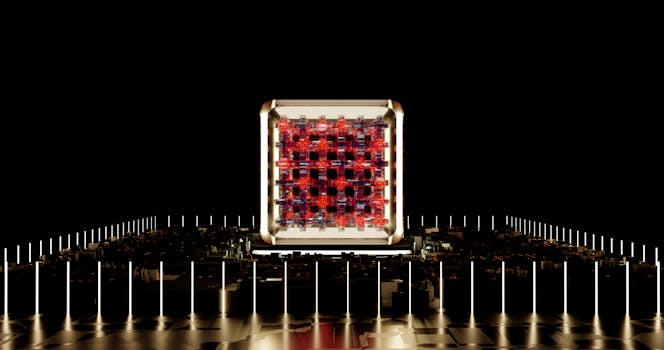 Photo: Pachon in Motion / Pexels
When we explain quantum computing simply, it’s vital to look beyond the theoretical and consider its tangible impact on real-world problems and the future of technology. While still in its early stages, quantum computing promises to revolutionize numerous industries, solving challenges that are currently intractable for even the most powerful classical supercomputers. One of the most anticipated applications is in material science and drug discovery. Simulating molecules and their interactions at a quantum level is incredibly complex. Classical computers struggle to model even moderately sized molecules accurately. Quantum computers, by their very nature, are adept at simulating quantum systems. This capability could lead to the development of new materials with unprecedented properties, such as superconductors that work at room temperature, more efficient solar cells, or lighter and stronger alloys. In pharmaceuticals, it could accelerate the discovery of new drugs by accurately modeling protein folding, drug-receptor interactions, and chemical reactions, drastically reducing the time and cost associated with developing life-saving medications.
The implications for medicine alone are profound. Another critical area is cryptography and cybersecurity. Shor's algorithm, a quantum algorithm, has the theoretical ability to break many of the public-key encryption schemes (like RSA) that secure our internet communications today. This poses a significant threat to current cybersecurity infrastructure. Consequently, a massive research effort is underway in 'post-quantum cryptography,' developing new encryption methods that are resistant to both classical and quantum attacks. Quantum computers could also enhance cybersecurity by enabling more secure communication through quantum key distribution (QKD), which leverages quantum mechanics to detect any eavesdropping attempts. Financial modeling is another sector poised for disruption. Quantum computers could optimize complex financial models, portfolio management, and risk analysis with greater speed and accuracy. For example, they could quickly calculate optimal trading strategies or identify market anomalies that classical algorithms miss. This could lead to more robust financial systems and more profitable investment strategies. In the field of artificial intelligence and machine learning, quantum computing offers the potential for quantum machine learning (QML). Quantum algorithms could process vast datasets faster, optimize neural networks more efficiently, and discover patterns that are currently hidden. This could lead to more powerful AI, capable of solving even more complex problems in areas like image recognition, natural language processing, and autonomous systems. Optimization problems, which are ubiquitous across industries from logistics and supply chain management to traffic control and resource allocation, are also prime candidates for quantum acceleration. Imagine optimizing delivery routes for thousands of packages in real-time, or managing complex energy grids to minimize waste and maximize efficiency. Quantum algorithms could find optimal solutions to these NP-hard problems much faster than classical methods. The future of computing will likely be a hybrid one, where classical computers handle most everyday tasks, and quantum computers act as powerful accelerators for specific, extremely challenging problems. This symbiotic relationship will unlock new frontiers in science, technology, and industry, driving innovation and shaping our world in ways we are only just beginning to imagine. The journey is long, but the destination promises a new era of computational power.
Common Misconceptions and What Quantum Computing Isn't (Yet)
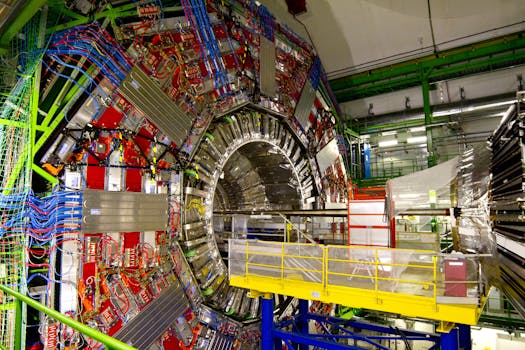 Photo: Ramaz Bluashvili / Pexels
When trying to explain quantum computing simply, it's equally important to address common misconceptions and clarify what this technology isn't, at least not yet. The hype surrounding quantum computing can sometimes overshadow the reality, leading to unrealistic expectations. Here are some key points to understand:
* **It won't replace your laptop or smartphone:** Quantum computers are not general-purpose machines designed to browse the web, run word processors, or play video games. Their specific architecture and operating principles make them unsuitable for everyday tasks. Classical computers excel at these functions and will continue to do so. Quantum computers are specialized tools for very specific, complex computational problems that classical machines struggle with.
* **It's not just a 'faster classical computer':** While quantum computers can be exponentially faster for certain algorithms, they don't simply perform classical calculations at a higher speed. They operate on entirely different principles, leveraging quantum mechanics to explore multiple possibilities simultaneously. It's a different way of computing, not just a souped-up version of what we already have.
* **It's not foolproof or error-free:** Qubits are incredibly fragile and susceptible to environmental noise (decoherence). This leads to errors in quantum computations. Significant research is being dedicated to quantum error correction, but building fault-tolerant quantum computers with a large number of stable qubits is a major engineering challenge that is still years, if not decades, away. Early quantum computers are 'noisy intermediate-scale quantum' (NISQ) devices, meaning they have a limited number of qubits and are prone to errors.
* **It doesn't solve *all* problems:** While immensely powerful for certain types of problems (like factoring, search, simulation, and optimization), there are many problems for which quantum computers offer no speedup over classical ones, or where classical algorithms are already efficient enough. The 'quantum advantage' or 'quantum supremacy' has only been demonstrated for highly specialized, academic problems, not yet for practical, real-world applications with commercial value.
* **It's not a magic bullet for AI:** While quantum machine learning is a promising field, it won't instantly create sentient AI or solve all current AI limitations. Quantum algorithms might accelerate certain aspects of machine learning, but they are an enhancement, not a complete replacement for classical AI techniques. The integration of quantum and classical AI is still an active area of research.
Understanding these distinctions is crucial for a balanced perspective on quantum computing. It helps to manage expectations and appreciate the specific, profound impact this technology will have, rather than viewing it as a universal solution to all computational woes. The journey to a fully functional, practical quantum computer is ongoing, filled with both immense promise and significant scientific and engineering hurdles.
