Future of Artificial Intelligence in Healthcare: A Revolution
future of artificial intelligence in healthcare

Future of Artificial Intelligence in Healthcare: A Revolution

Witness the transformative power of AI reshaping diagnostics, treatment, and patient care for a healthier tomorrow.

Discover AI's Impact

Key Takeaways

  • ✓ AI in healthcare market projected to reach over $100 billion by 2030.
  • ✓ Machine learning algorithms can analyze medical images with accuracy comparable to human experts.
  • ✓ AI-powered drug discovery can reduce R&D timelines by several years.
  • ✓ Personalized medicine driven by AI promises tailored treatments based on individual genetic profiles.

How It Works

1
Data Acquisition & Integration

AI systems ingest vast amounts of diverse healthcare data, including electronic health records, imaging, genomics, and research papers. This information is then standardized and integrated for comprehensive analysis.

2
Algorithmic Analysis & Pattern Recognition

Advanced machine learning and deep learning algorithms process the integrated data to identify complex patterns, correlations, and anomalies often imperceptible to the human eye. This forms the basis for predictive and diagnostic insights.

3
Insight Generation & Decision Support

Based on the analysis, AI generates actionable insights, such as disease risk predictions, optimal treatment pathways, or drug discovery candidates. These insights are presented to clinicians or researchers as decision support tools.

4
Continuous Learning & Refinement

AI models are designed to continuously learn from new data and clinical outcomes, refining their accuracy and improving their performance over time. This iterative process ensures the systems remain cutting-edge and relevant.

Revolutionizing Diagnostics and Predictive Analytics with AI
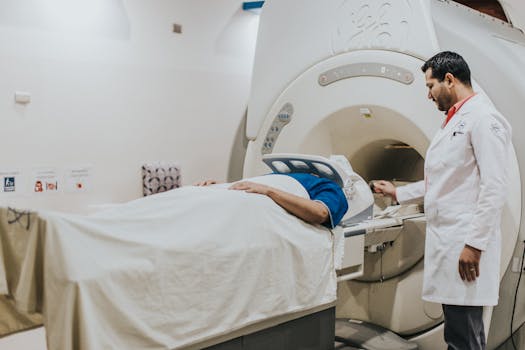
A doctor assists a patient during an MRI scan in a hospital setting, highlighting modern healthcare technology. Photo: Charlss GonzHu / Pexels
The advent of artificial intelligence is fundamentally transforming the landscape of medical diagnostics and predictive analytics, promising a future where diseases are detected earlier, more accurately, and with greater efficiency. Traditional diagnostic methods, while robust, often rely on human interpretation, which can be subject to variability and fatigue. AI, particularly through deep learning and machine learning algorithms, offers a powerful complement, or even a superior alternative, in many scenarios. Consider the realm of medical imaging. AI systems are now capable of analyzing X-rays, MRIs, CT scans, and pathology slides with remarkable precision, often identifying subtle anomalies that might be missed by the human eye. For instance, in radiology, AI algorithms can flag potential cancerous lesions in mammograms or identify early signs of neurological disorders in brain scans, leading to earlier intervention and improved patient prognoses. This is not merely about replicating human tasks; it's about augmenting human capabilities. AI can process thousands of images in the time it takes a radiologist to review a handful, significantly reducing diagnostic backlogs and accelerating patient care. Beyond image analysis, AI's prowess in predictive analytics is opening new frontiers. By sifting through vast datasets of electronic health records (EHRs), genomic information, lifestyle data, and even social determinants of health, AI can identify individuals at high risk for developing chronic conditions like diabetes, heart disease, or certain cancers, long before symptoms appear. This proactive approach enables personalized preventive care strategies, shifting the focus from treating illness to maintaining wellness. For example, AI models can predict a patient's likelihood of readmission after surgery, allowing healthcare providers to implement targeted interventions to prevent complications. Furthermore, in areas like sepsis detection, AI algorithms can monitor vital signs and lab results in real-time within hospital settings, issuing early warnings that can be life-saving. The integration of these AI-driven diagnostic and predictive tools into clinical workflows is not just an incremental improvement; it represents a paradigm shift towards a more proactive, personalized, and precise healthcare system. The ability to identify diseases at their earliest stages and predict future health risks empowers both patients and clinicians, fostering a collaborative approach to health management. This evolution is poised to dramatically improve patient outcomes and optimize resource allocation within healthcare systems globally, making healthcare more accessible and effective for everyone. Discover more about cutting-edge AI developments and their broad implications across various industries.

Personalized Treatment and Drug Discovery Accelerated by AI

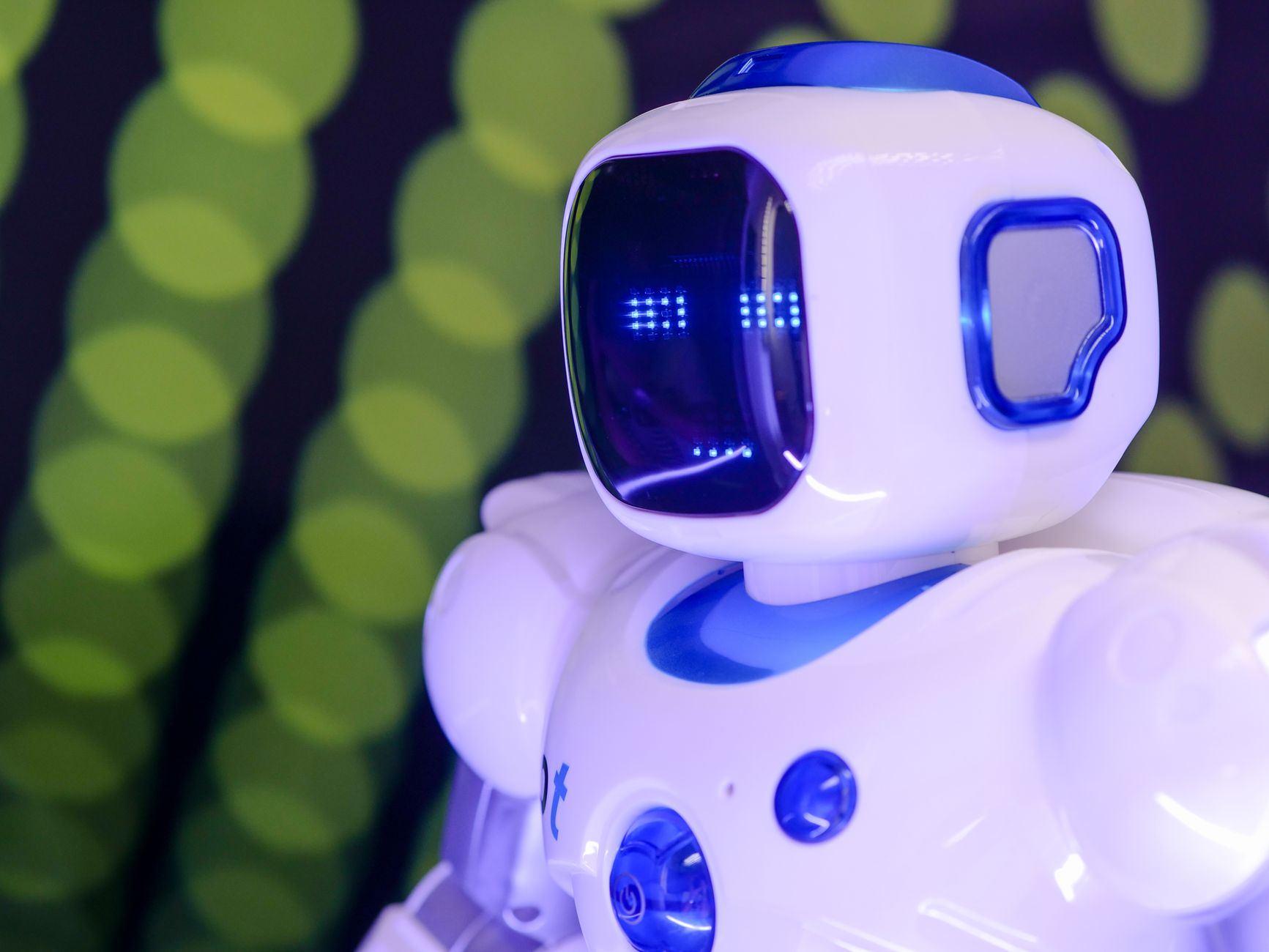
Close-up of a futuristic toy robot with blue eyes, showcasing modern technology indoors. Photo: Pavel Danilyuk / Pexels
The promise of personalized medicine, where treatments are tailored to an individual's unique genetic makeup, lifestyle, and environment, is being rapidly realized through the power of artificial intelligence. Historically, medical treatments often followed a 'one-size-fits-all' approach, which could be ineffective or even harmful for some patients. AI is dismantling this model by enabling an unprecedented level of individualization in therapeutic strategies. By analyzing a patient's genomic data, phenotypic characteristics, and response to previous treatments, AI algorithms can predict which therapies are most likely to be effective, minimize side effects, and optimize dosages. For oncology, this means identifying specific genetic mutations in a tumor that can be targeted by particular drugs, leading to more effective and less toxic cancer treatments. In pharmacogenomics, AI helps predict how a patient will metabolize certain medications, ensuring the right drug at the right dose for conditions ranging from depression to cardiovascular disease. This level of precision not only enhances efficacy but also significantly improves the patient experience and reduces healthcare costs associated with trial-and-error prescribing. Simultaneously, AI is revolutionizing the notoriously long, expensive, and high-risk process of drug discovery and development. The traditional drug development pipeline can take over a decade and cost billions of dollars, with a high failure rate. AI accelerates this by rapidly screening vast libraries of potential drug compounds, identifying promising candidates that bind effectively to target proteins, and predicting their efficacy and toxicity profiles much faster than conventional lab experiments. Machine learning models can analyze complex biological data to identify novel drug targets, design de novo molecules with desired properties, and optimize synthesis pathways. This dramatically shortens the lead optimization phase and reduces the number of compounds that need to be synthesized and tested experimentally, thereby cutting down both time and cost. Furthermore, AI is being used in clinical trial design, identifying ideal patient cohorts for trials, predicting patient response, and even monitoring trial participants for adverse events, making trials more efficient and ethical. The ability of AI to sift through enormous chemical and biological datasets, identify subtle correlations, and simulate molecular interactions is transforming drug discovery from a largely empirical process into a data-driven science. This acceleration in drug development is crucial for addressing unmet medical needs and rapidly responding to emerging health crises, promising a future with more effective and accessible medicines for a wider range of diseases.

Enhancing Operational Efficiency and Patient Engagement with AI
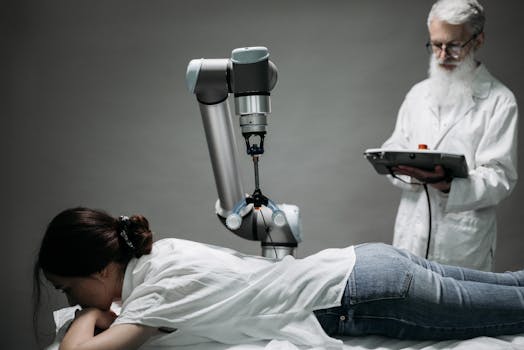
A woman receives a robotic massage as a scientist monitors, showcasing modern technology. Photo: Pavel Danilyuk / Pexels
Beyond direct clinical applications, artificial intelligence is profoundly impacting the operational efficiency of healthcare systems and significantly enhancing patient engagement, leading to a more streamlined and patient-centric experience. Healthcare organizations are complex entities, burdened by administrative tasks, resource allocation challenges, and the need to manage vast amounts of data. AI-powered solutions are stepping in to automate repetitive tasks, optimize workflows, and provide valuable insights into operational bottlenecks. For instance, AI can manage patient scheduling, reduce no-show rates through intelligent reminders and rescheduling options, and optimize hospital bed allocation, ensuring resources are utilized effectively. Robotic process automation (RPA), an AI offshoot, can handle billing, claims processing, and data entry, freeing up administrative staff to focus on more complex and human-centric tasks. This not only reduces operational costs but also improves the overall efficiency of healthcare delivery, allowing clinicians to spend more time with patients and less time on paperwork. On the patient engagement front, AI is creating more personalized and accessible healthcare experiences. AI-powered chatbots and virtual health assistants are becoming increasingly sophisticated, capable of answering patient queries, providing information about symptoms, guiding them through care pathways, and even offering mental health support. These tools can provide 24/7 access to information, reducing the burden on healthcare providers and empowering patients to take a more active role in managing their health. For example, an AI assistant can remind a patient to take medication, track their vital signs, or offer dietary advice based on their health profile. Moreover, AI can analyze patient feedback and sentiment from various sources to help healthcare providers understand patient needs better and tailor services accordingly. This leads to improved patient satisfaction and loyalty. The integration of AI into patient portals and mobile health applications also facilitates seamless communication between patients and providers, offering personalized health insights and educational content. This shift towards AI-driven patient engagement fosters a more collaborative relationship, where patients are informed, empowered, and actively participate in their health journey. The benefits extend to public health initiatives, where AI can analyze population health data to identify trends, predict outbreaks, and inform targeted interventions. Explore the latest advancements in AI-driven automation and its impact across various sectors, including healthcare.

Ethical Considerations and Future Challenges in AI Healthcare

A robotic hand reaching towards a bright light on a white background symbolizing innovation. Photo: Tara Winstead / Pexels
While the potential benefits of artificial intelligence in healthcare are immense, its widespread adoption is accompanied by significant ethical considerations and challenges that must be carefully navigated. One of the primary concerns revolves around data privacy and security. AI systems in healthcare rely on access to sensitive patient data, making them prime targets for cyberattacks. Ensuring robust data protection measures, adherence to regulations like HIPAA, and maintaining patient trust are paramount. Closely related is the issue of algorithmic bias. If AI models are trained on biased datasets, they can perpetuate and even amplify existing health disparities, leading to unequal treatment or misdiagnosis for certain demographic groups. Developing fair and transparent algorithms that perform equitably across all populations is a critical ethical imperative. Another major challenge is accountability. When an AI system makes a diagnostic error or recommends an ineffective treatment, who is responsible? Is it the developer, the physician who used the tool, or the hospital? Clear legal and ethical frameworks are needed to address liability in AI-driven healthcare. Furthermore, the 'black box' nature of some advanced AI models, where it's difficult to understand how a decision was reached, raises concerns about transparency and explainability. Clinicians need to understand the reasoning behind AI recommendations to ensure patient safety and maintain professional autonomy. The workforce implications of AI are also a concern; while AI is expected to augment human capabilities, there are fears about job displacement for certain roles, necessitating upskilling and reskilling initiatives. Finally, the cost of developing and implementing sophisticated AI solutions can be substantial, raising questions about equitable access to these advanced technologies, particularly in underserved regions. Addressing these ethical considerations and challenges through robust regulation, interdisciplinary collaboration, and continuous public dialogue will be crucial for realizing the full, equitable potential of AI in healthcare. Key areas for consideration: * **Data Privacy & Security:** Implementing advanced encryption and anonymization techniques. * **Algorithmic Bias:** Training AI on diverse, representative datasets and rigorous testing for fairness. * **Accountability & Liability:** Establishing clear legal frameworks for AI-assisted medical decisions. * **Transparency & Explainability:** Developing 'explainable AI' (XAI) models for clinical interpretation. * **Workforce Adaptation:** Investing in education and training for healthcare professionals to work with AI. * **Equitable Access:** Ensuring AI benefits are accessible to all, not just privileged populations. * **Regulatory Oversight:** Developing agile regulations that keep pace with technological advancements.

Comparison

FeatureAI-Powered HealthcareTraditional Healthcare (Pre-AI)Potential Drawbacks of AI
Diagnostic AccuracyHigh (often exceeding human in specific tasks)Variable, dependent on human expertiseAlgorithmic bias, 'black box' issues
PersonalizationHighly personalized treatment plansGeneralized, 'one-size-fits-all' approachData privacy concerns
Drug Discovery SpeedSignificantly acceleratedVery slow, expensive processHigh computational costs
Operational Efficiency✓ (Automated tasks, optimized workflows)✗ (Manual, prone to bottlenecks)Initial implementation complexity
Patient EngagementProactive, 24/7 support, tailored infoReactive, limited digital interactionDigital divide, depersonalization risk
Cost-EffectivenessLong-term cost reduction, efficiency gainsRising costs, inefficienciesHigh initial investment

What Readers Say

"The future of artificial intelligence in healthcare is incredibly promising. We've seen a 30% reduction in diagnostic time for certain cancers, directly translating to earlier interventions and improved patient outcomes in our clinic."

Dr. Elena Rodriguez · Boston, MA

"As a patient with a rare condition, the personalized treatment insights generated by AI have been a game-changer. It's truly revolutionary to have a treatment plan so finely tuned to my individual biological markers."

Mark Thompson · San Francisco, CA

"Implementing AI in our hospital's operations reduced administrative overhead by 25% within the first year. This allowed us to reallocate resources towards direct patient care, significantly improving our service quality."

Sarah Chen, CEO · New York, NY

"While the diagnostic capabilities of AI are astounding, we still need to address the ethical implications and ensure data security. It's a powerful tool, but requires careful governance to realize its full potential safely."

David Lee · Chicago, IL

"My virtual AI health assistant has made managing my chronic condition so much easier. From medication reminders to personalized exercise suggestions, it feels like having a dedicated health coach always available."

Maria Garcia · Austin, TX

Frequently Asked Questions

What is the most significant impact of the future of artificial intelligence in healthcare?

The most significant impact lies in its ability to enable precision medicine, allowing for highly personalized diagnostics and treatment plans tailored to an individual's unique biological and genetic profile. This leads to more effective interventions, reduced side effects, and improved patient outcomes across a vast array of medical conditions, fundamentally transforming how healthcare is delivered and experienced.

Is AI in healthcare safe, and will it replace doctors?

AI in healthcare is being developed with rigorous safety protocols, but like any technology, it carries risks that are being addressed through regulation and ethical guidelines. It is not expected to replace doctors but rather to augment their capabilities, acting as a powerful assistant that enhances diagnostic accuracy, streamlines workflows, and provides invaluable decision support, allowing doctors to focus more on complex cases and patient interaction.

How can I, as a patient, benefit from the future of artificial intelligence in healthcare?

As a patient, you can benefit from earlier and more accurate disease detection, more personalized and effective treatment plans, reduced wait times due to optimized hospital operations, and enhanced access to health information and support through AI-powered virtual assistants. This translates to better health outcomes and a more engaging, proactive approach to your personal health management.

What are the cost implications of integrating AI into healthcare?

While the initial investment in AI infrastructure and development can be substantial, the long-term cost implications are generally positive. AI can lead to significant cost savings through improved diagnostic efficiency, optimized resource allocation, reduced administrative overhead, accelerated drug discovery, and prevention of costly chronic disease progression. This makes healthcare more sustainable and accessible in the long run.

How does AI in healthcare compare to traditional medical research methods?

AI complements and significantly enhances traditional medical research methods. While traditional methods rely on human hypothesis generation and experimental validation, AI can analyze vast datasets to identify novel patterns, predict drug targets, and simulate molecular interactions at an unprecedented scale and speed. This accelerates the research pipeline, reduces trial-and-error, and opens avenues for discovery that were previously unimaginable, leading to faster development of new treatments.

Who should embrace the future of artificial intelligence in healthcare?

Everyone involved in the healthcare ecosystem should embrace the future of artificial intelligence in healthcare. This includes healthcare providers, hospital administrators, pharmaceutical companies, researchers, policymakers, and especially patients. Adopting AI collaboratively ensures that its benefits are maximized, ethical considerations are addressed, and healthcare systems evolve to be more efficient, equitable, and patient-centric for all.

What are the biggest risks or challenges associated with AI in healthcare?

The biggest risks include concerns over data privacy and security of sensitive patient information, potential algorithmic bias leading to health inequities, the 'black box' problem where AI decisions lack transparency, and the need for clear accountability frameworks when AI errors occur. Addressing these challenges through robust ethical guidelines, regulations, and transparent development practices is crucial for responsible AI integration.

What are the emerging trends for the future of artificial intelligence in healthcare?

Emerging trends include the increasing use of 'explainable AI' (XAI) to improve transparency, the integration of AI with wearable devices and IoT for continuous patient monitoring, advances in AI for mental health support and precision psychiatry, the development of AI-powered digital twins for personalized treatment simulations, and the growing role of federated learning to leverage data while preserving privacy across institutions.

The future of artificial intelligence in healthcare is not just a distant vision; it's unfolding now, promising a healthier, more efficient, and personalized medical landscape. Embrace this revolution to transform health outcomes and operational excellence for generations to come.

Topics: future of artificial intelligence in healthcareAI in medicinehealthcare innovationmedical AI applicationsdigital health
Leo List
Brampton weed
Adultwork EstrelaBet Vai de Bet R7 Bet Betão Galera Bet Rainbet Bet9ja Shop SportyBet BetKing Sisal Loto Foot Hollywoodbets YesPlay Odibets RushBet Jugabet BetWarrior BetCity MSport betPawa Fortebet