The Future of Electric Vehicles: Driving Tomorrow Today
future of electric vehicles

The Future of Electric Vehicles: Driving Tomorrow Today

Uncover how groundbreaking innovations are rapidly shaping the electric vehicle landscape and revolutionizing personal mobility.

Discover Your EV Future

Key Takeaways

  • ✓ Global EV sales are projected to reach 30 million by 2030, representing over 30% of new car sales.
  • ✓ Solid-state batteries promise significantly longer ranges and faster charging times for future EVs.
  • ✓ Bidirectional charging (V2G) will allow EVs to power homes and stabilize the grid.
  • ✓ Autonomous driving technology is rapidly integrating with electric vehicle platforms, enhancing safety and convenience.

How It Works

1
Advanced Battery Chemistry

Next-generation batteries like solid-state and silicon-anode cells will increase energy density, allowing for greater range in a smaller, lighter package. This will reduce 'range anxiety' and make EVs more practical for long-distance travel.

2
Ubiquitous Charging Infrastructure

The charging network will expand dramatically, incorporating ultra-fast DC chargers, wireless charging pads, and even dynamic charging lanes. This ensures convenient and rapid energy replenishment wherever drivers go, akin to traditional fueling stations.

3
Integrated Smart Grid Interaction

EVs will become active participants in the smart grid through vehicle-to-grid (V2G) technology. They'll store renewable energy, discharge power back to the home or grid during peak demand, and optimize charging based on energy prices and availability.

4
Autonomous & Connected Driving

Future electric vehicles will feature advanced AI-driven autonomous systems, enhancing safety, reducing traffic congestion, and enabling new mobility services. Seamless connectivity will allow for over-the-air updates, personalized experiences, and real-time traffic optimization.

Revolutionary EV Battery Technology and Range

Close-up of a high-capacity portable battery with digital display showing 98 percent charge. Photo: Erik Mclean / Pexels
The heart of every electric vehicle lies in its battery, and the advancements in this domain are nothing short of revolutionary. While current lithium-ion batteries have made EVs viable, the next generation promises to redefine performance, cost, and sustainability. Solid-state batteries, for instance, are widely considered the holy grail of EV power. Unlike liquid electrolyte lithium-ion cells, solid-state batteries use a solid electrolyte, which offers several compelling advantages. They are inherently safer, reducing the risk of thermal runaway and fire. More importantly, they boast significantly higher energy density, meaning more range from a smaller, lighter battery pack. This breakthrough could push typical EV ranges past 500 miles on a single charge, making range anxiety a relic of the past. Companies like Toyota, QuantumScape, and Solid Power are making substantial progress, with prototypes already demonstrating impressive capabilities. We could see commercial solid-state EVs on the road within the next five to ten years. Beyond solid-state, other promising chemistries are emerging. Silicon-anode batteries, which replace graphite anodes with silicon, offer a tenfold increase in energy storage capacity compared to graphite. While challenges remain in managing silicon's volume expansion during charging and discharging, companies are developing innovative solutions to mitigate these issues. Lithium-sulfur batteries are another contender, offering high theoretical energy density and using abundant, inexpensive sulfur. However, their short cycle life and degradation issues are still being addressed through advanced material science. Sodium-ion batteries, which forego lithium altogether, are attracting attention for their lower cost and abundant raw materials, making them suitable for entry-level EVs or stationary storage. These diverse approaches highlight a future where battery technology is not a one-size-fits-all solution but a spectrum of optimized chemistries tailored to specific vehicle types and consumer needs. Furthermore, battery manufacturing processes are becoming more efficient and sustainable. Gigafactories are scaling up production, driving down costs through economies of scale. Innovations in battery recycling are also crucial, aiming to recover valuable materials like lithium, cobalt, and nickel, reducing reliance on new mining and minimizing environmental impact. The concept of 'second-life' batteries, where EV batteries are repurposed for stationary energy storage after their automotive lifespan, is gaining traction, further enhancing their sustainability footprint. This holistic approach to battery development, from raw materials to end-of-life, is foundational to the long-term success and environmental benefits of the future of electric vehicles. As these technologies mature, EVs will become not just an alternative, but the superior choice for personal transportation, offering unmatched performance, lower operating costs, and a significantly reduced carbon footprint. The convergence of these battery innovations will ultimately make EVs more accessible, more powerful, and more sustainable for everyone, paving the way for a truly electric future. Exploring cutting-edge advancements in energy storage reveals the depth of these transformations.

Advancements in EV Charging Infrastructure and Grid Integration
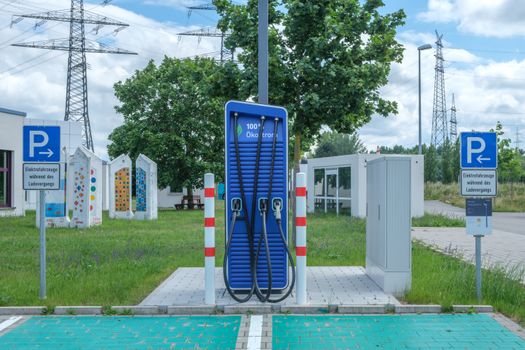
Public charging station with eco-friendly design for electric vehicles. Photo: Reinhard Bruckner / Pexels
The widespread adoption of electric vehicles hinges on a robust, accessible, and intelligent charging infrastructure. The future of electric vehicle charging goes far beyond simply plugging in; it envisions a seamless ecosystem where charging is fast, convenient, and integrated with smart energy management. Ultra-fast DC charging networks, capable of adding hundreds of miles of range in minutes, will become commonplace along major highways and in urban centers. These chargers, often exceeding 350 kW, will significantly reduce travel times and alleviate range anxiety for long journeys. Companies like Electrify America and EVgo are continuously expanding their networks, while new players and technologies are entering the market to accelerate this build-out. Beyond speed, convenience is a key driver. Wireless charging technology, both static and dynamic, holds immense promise. Imagine parking your EV over a charging pad in your garage or at a public parking spot and having it charge automatically without any physical connection. This inductive charging is already available for some vehicles and will become more widespread, simplifying the charging experience. Dynamic wireless charging, embedded in roads, could even charge vehicles as they drive, potentially eliminating the need for large battery packs and enabling continuous, uninterrupted travel. While this technology is still in early development, pilot projects are demonstrating its feasibility and potential to revolutionize how we power our vehicles. Crucially, future EV charging will be deeply intertwined with the smart grid. Vehicle-to-grid (V2G) technology is a game-changer, transforming EVs from passive consumers into active participants in energy management. EVs parked at home or work can store excess renewable energy (from solar panels, for example) and then discharge power back to the grid during peak demand or power outages. This bidirectional flow of energy helps stabilize the grid, reduces reliance on fossil fuel 'peaker plants,' and can even generate revenue for EV owners. Smart charging algorithms will optimize when and how EVs charge, taking into account electricity prices, grid demand, and renewable energy availability. This intelligent integration will not only make the grid more resilient but also maximize the environmental benefits of EVs by ensuring they are charged with the cleanest energy possible. The user experience of charging will also evolve. Seamless payment systems, potentially integrated directly into the vehicle's navigation or infotainment system, will eliminate the need for multiple apps or RFID cards. Reservation systems for popular charging stations, real-time availability updates, and personalized charging recommendations will further streamline the process. The expansion of charging infrastructure into multi-unit dwellings, workplaces, and public spaces will make EV ownership feasible for a much broader demographic, addressing current accessibility challenges. This comprehensive approach to charging, combining speed, convenience, intelligence, and integration, is vital for realizing the full potential of the future of electric vehicles and fostering a truly sustainable transportation ecosystem.

The Convergence of Autonomous Driving and Electric Vehicles
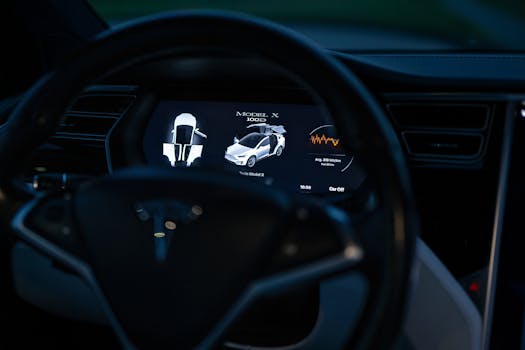
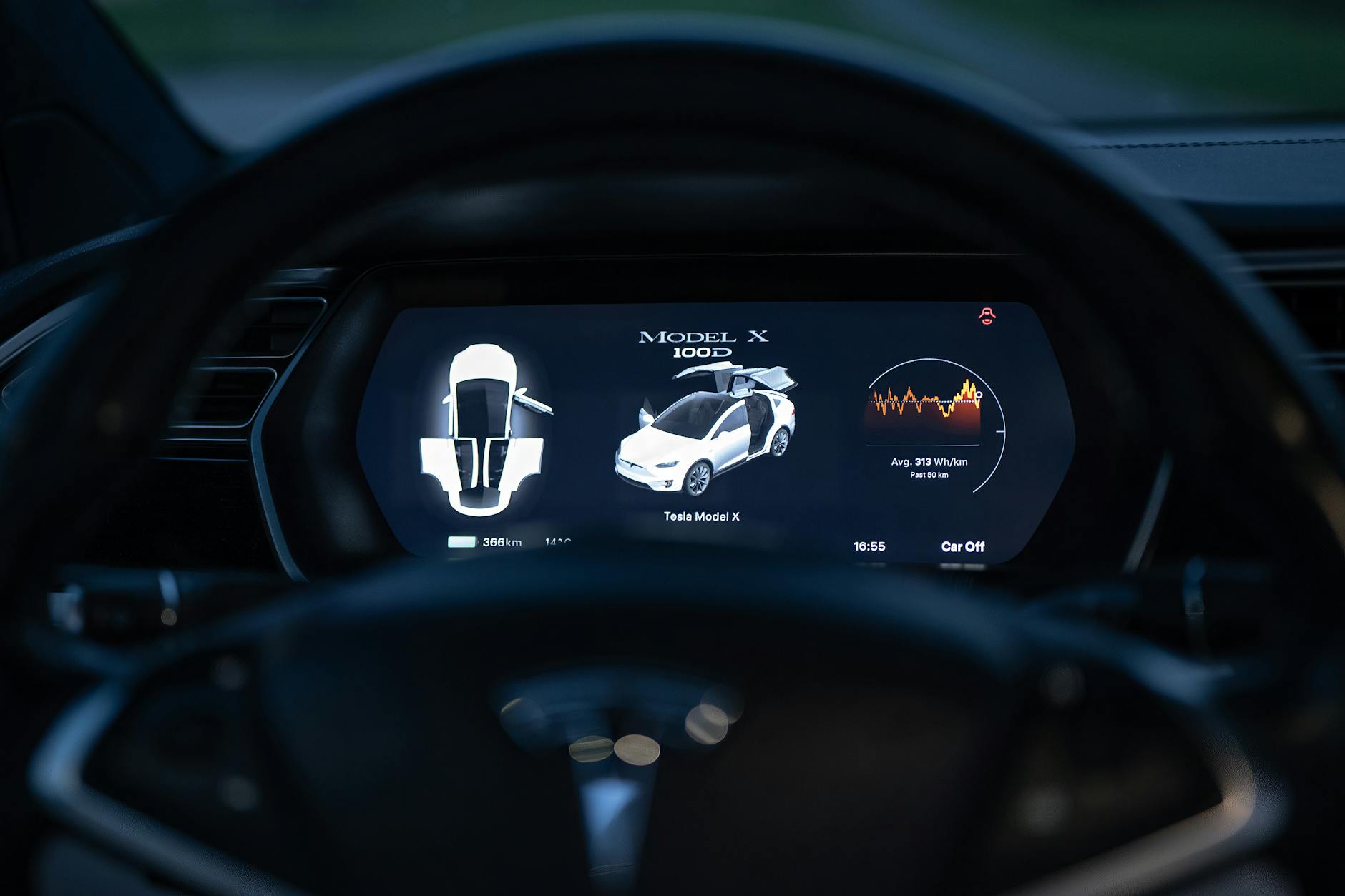
Close-up of a Tesla Model X dashboard display, showcasing advanced technology features. Photo: Vladimir Srajber / Pexels
The future of electric vehicles isn't just about how they're powered; it's also about how they're driven, or rather, how they drive themselves. The convergence of autonomous driving technology with electric propulsion creates a synergy that promises to reshape personal mobility and logistics. Electric platforms are inherently well-suited for autonomous systems due to their simpler architecture, precise electronic control, and the abundance of onboard power for sensors and computing. The smooth, quiet operation of EVs also enhances the passenger experience in an autonomous setting, making journeys more relaxing and productive. Autonomous driving systems are evolving rapidly, moving through various levels of automation. While Level 2 (driver assistance features like adaptive cruise control and lane keeping) is common today, Level 3 (conditional automation, where the car can drive itself under specific conditions but requires driver availability) is already being deployed in limited capacities. The true revolution lies in Level 4 (high automation, where the vehicle can handle most driving situations independently) and Level 5 (full automation, where the vehicle can operate anywhere, anytime, without human intervention). These higher levels will unlock transformative benefits, including significantly enhanced safety, as human error is eliminated from the driving equation. Traffic congestion could be drastically reduced through optimized vehicle spacing and flow, leading to shorter travel times and lower energy consumption. Parking will become a non-issue, as autonomous EVs can drop off passengers and then find parking themselves, or even serve as part of a shared fleet. Moreover, the integration of AI and machine learning is central to the advancement of autonomous EVs. Sophisticated sensor suites – including cameras, radar, lidar, and ultrasonic sensors – collect vast amounts of data about the vehicle's surroundings. This data is then processed by powerful onboard computers running complex AI algorithms that perceive, predict, and plan. Over-the-air (OTA) updates will allow manufacturers to continuously improve these systems, adding new features and refining performance throughout the vehicle's lifespan, much like how smartphones receive software updates. This constant evolution means that an autonomous EV purchased today will become smarter and more capable over time. The implications for urban planning and logistics are profound. Autonomous electric robotaxis and ride-sharing services could significantly reduce the need for private car ownership, especially in dense urban environments, leading to fewer vehicles on the road, less parking demand, and reduced emissions. Electric autonomous trucks and delivery vans could revolutionize freight transport, operating more efficiently and safely, potentially around the clock. The 'last mile' delivery problem, a persistent challenge in logistics, could be solved by autonomous electric drones or small delivery robots. This fusion of electric power and autonomous intelligence is not just about making cars smarter; it's about creating an entirely new paradigm for transportation that is safer, more efficient, more accessible, and far more sustainable. The future of electric vehicles is undeniably connected and self-driving, offering an exciting glimpse into a truly transformed world of mobility. Understanding the ethical considerations of AI in autonomous vehicles is also a critical part of this evolution.

Navigating the Future: Tips for Adopting Electric Vehicles

A woman uses a home electric vehicle charger mounted on a brick wall. Photo: Andersen EV / Pexels
Embracing the future of electric vehicles can be an exciting and rewarding journey, but it comes with unique considerations. As the technology evolves, understanding the landscape and preparing for ownership will ensure a smooth transition. Here are some essential tips for current and prospective EV owners: * **Assess Your Charging Needs:** Before purchasing an EV, evaluate your daily driving habits and access to charging. Most EV owners do 80-90% of their charging at home overnight, which is the most convenient and often cheapest option. Consider installing a Level 2 (240V) charger for faster home charging. If home charging isn't feasible, map out public charging stations near your workplace or frequent destinations using apps like PlugShare. * **Understand Battery Technology & Longevity:** Familiarize yourself with different battery chemistries and their characteristics. While range is a primary concern, also consider battery degradation. Modern EV batteries are designed to last for many years and miles, often with warranties covering 8-10 years or 100,000-150,000 miles. Don't let myths about short battery life deter you; advancements have made them incredibly robust. * **Explore Incentives and Rebates:** The U.S. federal government and many states offer significant tax credits, rebates, and other incentives for purchasing new or used EVs, as well as for installing home charging equipment. Research these programs thoroughly, as they can substantially reduce the upfront cost of ownership. These incentives are dynamic and can change, so stay informed. * **Plan for Long Trips:** While range anxiety is diminishing, planning for long-distance travel is still important. Utilize in-car navigation systems or apps that integrate charging stops into your route. The charging network is expanding rapidly, but knowing where the fast chargers are located along your journey can save time and stress. * **Consider Total Cost of Ownership (TCO):** EVs often have a lower TCO than gasoline cars due to lower fuel costs (electricity is generally cheaper than gasoline), reduced maintenance (fewer moving parts, no oil changes, spark plugs, or exhaust systems), and potential tax benefits. While the initial purchase price might be higher for some models, the long-term savings can be substantial. * **Embrace Software Updates:** Modern EVs are essentially computers on wheels. They receive over-the-air (OTA) software updates that can improve performance, add new features, enhance safety, and optimize battery management. Ensure your vehicle's software is kept up to date to benefit from the latest innovations. * **Test Drive Multiple Models:** Just like with traditional cars, test driving different EV models is crucial. Pay attention to range, charging speed, interior space, technology features, and how the vehicle handles. The driving experience of an EV is often unique due to instant torque and quiet operation. By following these tips, you can confidently navigate the evolving world of electric vehicles and make an informed decision that aligns with your lifestyle and environmental goals. The future of electric vehicles is bright, and being prepared will allow you to fully enjoy the benefits of this transformative technology.

Comparison

FeatureCurrent EVs (2024)Future EVs (2030+)Internal Combustion Engine (ICE)
Typical Range250-350 miles400-600+ miles300-450 miles
Charging Time (to 80%)20-40 mins (DC Fast)10-20 mins (Ultra-Fast)5-10 mins
Battery ChemistryLithium-ion (liquid)Solid-state, Silicon-anodeN/A
Autonomy LevelLevel 2 (ADAS)Level 4-5 (Full Self-Driving)Level 0-2
Grid IntegrationLimited (some V2H)Extensive (V2G, Smart Charging)None
Maintenance CostLowVery LowModerate to High
Emissions (Tailpipe)ZeroZeroHigh

What Readers Say

"The rapid pace of innovation in the future of electric vehicles is astounding. My new EV already feels like a glimpse into tomorrow, and I can't wait to see what comes next with battery tech and charging."

Sarah J. · Austin, TX

"I'm particularly excited about V2G technology. The idea of my car powering my home during an outage, or even earning money by supporting the grid, makes the future of electric vehicles incredibly appealing."

Mark D. · Seattle, WA

"My current EV already gets over 300 miles of range, which has eliminated my range anxiety. Knowing that the future of electric vehicles promises even more range and faster charging means I'll never go back to gas."

Jessica L. · Denver, CO

"While the charging infrastructure still needs to catch up in some rural areas, the advancements in urban charging and the promise of autonomous features in the future of electric vehicles are truly impressive. It's a journey, but a worthwhile one."

David P. · Boston, MA

"As a rideshare driver, the lower operating costs and quiet ride of my EV are fantastic. The future of electric vehicles, especially with self-driving capabilities, will revolutionize my profession and make commutes so much more enjoyable for everyone."

Emily R. · Los Angeles, CA

Frequently Asked Questions

What are the biggest innovations expected in the future of electric vehicles?

The future of electric vehicles promises significant innovations in solid-state battery technology for increased range and safety, ultra-fast charging infrastructure, advanced bidirectional charging (V2G) for grid integration, and highly autonomous driving capabilities (Level 4 and 5). These advancements will make EVs more efficient, convenient, and integrated into our daily lives.

Will electric vehicles become affordable for everyone?

Yes, affordability is a key focus for the future of electric vehicles. As battery costs continue to decline, manufacturing processes become more efficient, and diverse models enter the market, EVs are projected to reach price parity with internal combustion engine vehicles. Government incentives and lower operating costs further enhance their long-term affordability.

How will charging an EV change in the coming years?

Charging in the future of electric vehicles will be faster, more ubiquitous, and smarter. We'll see widespread ultra-fast DC chargers, more wireless charging options (both static and dynamic), and seamless integration with smart grids through V2G technology. Charging will become an almost invisible part of daily life, optimized for convenience and cost.

What is the long-term cost of owning a future electric vehicle?

The long-term cost of owning a future electric vehicle is expected to be significantly lower than ICE vehicles. This is due to cheaper 'fuel' (electricity vs. gasoline), substantially reduced maintenance requirements (fewer moving parts, no oil changes), and potential savings from V2G capabilities. Initial purchase prices are also projected to decrease, enhancing overall value.

How do future electric vehicles compare to hydrogen fuel cell vehicles?

While hydrogen fuel cell vehicles (FCVs) offer quick refueling and zero tailpipe emissions, the future of electric vehicles (battery EVs) currently has a stronger momentum. Battery EVs benefit from a rapidly expanding charging infrastructure, higher energy efficiency (well-to-wheel), and lower manufacturing complexity. FCVs face challenges in hydrogen production, storage, and distribution infrastructure, making them a niche solution for specific applications like heavy-duty trucking rather than widespread personal use.

Who stands to benefit most from the future of electric vehicles?

Everyone stands to benefit from the future of electric vehicles. Drivers will enjoy lower operating costs, quieter rides, and advanced safety features. Urban dwellers will experience cleaner air and reduced noise pollution. The energy grid will become more stable and resilient with V2G integration, and the environment will benefit from reduced greenhouse gas emissions and reliance on fossil fuels. Businesses will also see new opportunities in logistics and mobility services.

Are there any safety concerns with the advanced batteries in future EVs?

Battery safety is a top priority in the future of electric vehicles. Innovations like solid-state batteries are inherently safer than current liquid electrolyte lithium-ion cells due to their non-flammable solid electrolyte. Manufacturers are also implementing advanced battery management systems and robust crash structures to ensure the highest safety standards, making future EVs among the safest vehicles on the road.

What role will AI play in the future of electric vehicles?

AI will play a transformative role in the future of electric vehicles. It will power advanced autonomous driving systems, optimize battery performance and lifespan, manage charging schedules for grid integration, personalize in-car experiences, and enable predictive maintenance. AI will make EVs smarter, safer, more efficient, and more enjoyable to own and operate.

The future of electric vehicles is not a distant dream; it's rapidly unfolding before our eyes, promising a cleaner, smarter, and more efficient way to move. Embrace the EV revolution and be part of shaping a sustainable tomorrow. Start exploring electric vehicle options today.

Topics: future of electric vehiclesEV battery technologyelectric car chargingsustainable transportationautonomous EVs
Leo List
Brampton weed
Adultwork