✓ VR headsets create an immersive 3D environment by presenting slightly different images to each eye.
✓ Head tracking sensors are crucial for synchronizing virtual movement with real-world head movements.
✓ High-resolution displays and wide fields of view are essential for a convincing VR experience.
✓ Latency, the delay between input and visual response, must be minimized to prevent motion sickness.
How It Works
1
Stereoscopic Display
Two distinct images, one for each eye, are rendered from slightly different perspectives. This mimics how our natural vision perceives depth in the real world.
2
Head Tracking & Sensors
Integrated sensors (accelerometers, gyroscopes, magnetometers) continuously monitor the user's head orientation and position. This data is fed back to the system to update the virtual scene in real-time.
3
Optical Lenses
Specialized lenses within the headset magnify and distort the display, making the screen appear much larger and closer. They also correct for optical aberrations and expand the field of view.
4
Processing & Rendering
A powerful computer or dedicated processor renders the virtual environment at a high frame rate. This ensures smooth, responsive visuals that keep pace with the user's movements.
The Core Components of a Virtual Reality Headset
Photo: olia danilevich / Pexels
At its heart, understanding how do virtual reality headsets work requires a look at their fundamental building blocks. These devices are sophisticated pieces of engineering, combining several key technologies to trick your brain into believing it's in another world. The primary components include high-resolution displays, specialized lenses, and an array of sophisticated sensors. Each plays a critical role in delivering the immersive experience users have come to expect. Without any one of these elements performing optimally, the illusion of virtual reality quickly breaks down, leading to discomfort or a less engaging experience. The displays, often OLED or LCD panels, are engineered for high pixel density and fast refresh rates. This is crucial because the screens are positioned mere inches from your eyes, and any visible pixelation or motion blur would detract significantly from immersion. A high refresh rate, typically 90Hz or higher, ensures that motion appears fluid and natural, minimizing the jarring effects of low frame rates that can induce motion sickness. The lenses, often referred to as Fresnel lenses in many modern VR headsets, are not just simple magnifiers. They serve multiple purposes: magnifying the image to fill your field of view, correcting for optical distortions that would otherwise occur due to the close proximity of the display, and bending light in such a way that the flat screen appears to be a vast, three-dimensional space. The design of these lenses is a complex science, balancing field of view, clarity, and the reduction of visual artifacts like chromatic aberration or the 'screen door effect.' Exploring display technology further reveals the innovation behind these tiny screens. Beyond the visual components, the sensor suite is arguably the most vital element for interaction. These include accelerometers, gyroscopes, and magnetometers, which together provide 6-degrees of freedom (6DoF) tracking for the headset itself. This means the system can detect not only the orientation of your head (pitch, yaw, roll) but also its position in space (moving forward/backward, up/down, left/right). More advanced systems incorporate external cameras or infrared emitters/receivers for 'outside-in' or 'inside-out' tracking, respectively, to achieve even greater precision and track controllers. This intricate dance between hardware and software is what allows you to look around a virtual environment and have it respond seamlessly to your natural head movements, creating a powerful sense of presence.
The Science of Immersion: How VR Tricks Your Brain
Photo: Mikhail Nilov / Pexels
The true magic in how do virtual reality headsets work lies in their ability to manipulate human perception, effectively tricking your brain into believing it’s somewhere else. This phenomenon, known as immersion and presence, is achieved through a combination of stereoscopic vision, low latency tracking, and a wide field of view. Our brains naturally perceive depth by comparing the slightly different images received by each eye – a process called stereopsis. VR headsets replicate this by displaying two separate images, rendered from slightly different angles, to your left and right eyes. Each image is specifically tailored to that eye's perspective within the virtual scene. When these two images are combined by your brain, they create a compelling illusion of three-dimensional depth, making virtual objects appear to have volume and distance, just like in the real world. This stereoscopic effect is foundational to VR's visual realism. However, visual depth alone isn't enough for true immersion. The responsiveness of the virtual world to your movements is equally critical. This is where low latency head tracking comes into play. Latency refers to the delay between your physical movement and the corresponding update in the virtual display. If this delay is too long, even by a few milliseconds, it can cause a disconnect between what your eyes see and what your inner ear (vestibular system) senses. This sensory mismatch is a primary cause of motion sickness in VR. Therefore, VR systems are engineered to minimize latency to an imperceptible level, typically below 20 milliseconds, ensuring that when you turn your head, the virtual world responds instantly and smoothly. This seamless synchronization is vital for maintaining the illusion of presence. The field of view (FOV) also plays a significant role. Our natural human FOV is quite wide, encompassing roughly 180-220 degrees horizontally. Early VR headsets had much narrower FOVs, which could feel like looking through binoculars, diminishing the sense of being 'there.' Modern VR headsets strive for wider FOVs, often exceeding 100 degrees, to fill more of your peripheral vision. This wider perspective reduces the feeling of being constrained and enhances the sense of being enveloped by the virtual environment. When these elements – stereoscopic vision, ultra-low latency tracking, and a wide FOV – are combined effectively, your brain's perceptual systems are overwhelmed and convinced that the virtual world is real, leading to a profound sense of presence and immersion. This is the ultimate goal of VR technology, transforming a digital simulation into a believable experience.
From Input to Output: The VR Data Pipeline
Photo: Atlantic Ambience / Pexels
Understanding how do virtual reality headsets work also involves tracing the journey of data from your physical movements to the vivid virtual images you perceive. This intricate data pipeline is a marvel of computational efficiency and real-time processing. It begins with input from the user, primarily through head movements and controller actions. The headset's internal sensors (accelerometers, gyroscopes, magnetometers) continuously measure its orientation and angular velocity. For positional tracking (moving through space), external base stations or internal cameras track the headset's position relative to the environment. This raw sensor data is then sent to the VR system's processing unit – which could be a powerful gaming PC, a dedicated console, or an integrated mobile processor within standalone headsets. This processor is tasked with interpreting the sensor data, predicting future movements, and translating them into corresponding changes within the virtual scene. The computational demands here are immense. For a smooth VR experience, the system needs to render two distinct images (one for each eye) at a very high frame rate, often 90 frames per second (fps) or more. This means the processor must generate and update 180 images every second, each from a slightly different perspective, while simultaneously accounting for the user's real-time movements. This requires a graphics processing unit (GPU) with significant horsepower, capable of rendering complex 3D environments with high fidelity and speed. Understanding GPU architecture can shed more light on this demanding process. Once the virtual scene is rendered, the two distinct images are then transmitted to the headset's displays. Before they reach your eyes, these images pass through the specialized lenses. As discussed earlier, these lenses magnify the image, correct for optical distortions, and create the illusion of depth and a wide field of view. The entire process, from a slight turn of your head to the updated visual appearing on the displays, must happen with minimal delay – typically under 20 milliseconds – to prevent motion sickness and maintain immersion. This ultra-low latency is a cornerstone of effective VR, requiring optimized hardware, efficient software algorithms, and high-bandwidth data transfer between components. The seamless integration of these steps – sensing, processing, rendering, and display – is what allows VR to create such a convincing and interactive virtual experience, making the user feel truly present in a digital world.
Challenges and Future: Advancing Virtual Reality Technology
Photo: cottonbro studio / Pexels
While understanding how do virtual reality headsets work reveals incredible technological achievements, the field is still ripe with challenges and opportunities for innovation. One of the most significant ongoing challenges is the 'VR sickness' or motion sickness experienced by some users. This often stems from the vergence-accommodation conflict (VAC), where the eyes focus at one distance (the screen) but converge at another (the virtual object's perceived distance). While lenses mitigate this, it's not fully resolved. Future displays, such as varifocal or light field displays, aim to dynamically adjust focus, mimicking natural eye behavior more closely and potentially eliminating VAC. Another hurdle is the resolution and field of view. Despite significant improvements, current VR displays still have visible pixels (the 'screen door effect') and don't fully match the human eye's resolution or peripheral vision. Achieving 'retina resolution' in VR, where individual pixels are indistinguishable, requires incredibly high pixel densities and immense processing power. Foveated rendering, a technique that renders the area where the user is looking (the fovea) at full resolution while reducing detail in the periphery, is a promising solution to optimize processing power without sacrificing perceived quality. This relies on advanced eye-tracking technology, which is becoming more prevalent in high-end headsets. The bulk and weight of headsets also remain a challenge. While standalone headsets have made strides in portability, they are still somewhat cumbersome for extended use. Future designs aim for lighter, more ergonomic form factors, potentially resembling regular glasses. This will require miniaturization of components, more efficient power sources, and innovative display technologies like pancake lenses that allow for thinner optics. Haptic feedback is another area of intense development. While controllers provide some tactile feedback, truly immersive VR requires more nuanced haptics that can simulate textures, temperatures, and forces. Haptic gloves and full-body suits are being explored to provide a more complete sensory experience, further blurring the line between the virtual and physical. Finally, the cost of high-fidelity VR remains a barrier for many. As technology matures and manufacturing processes become more efficient, prices are expected to drop, making advanced VR more accessible to a broader audience. The future of VR promises even more seamless, comfortable, and realistic experiences, driven by continuous innovation in displays, tracking, haptics, and processing power.
Comparison
Feature
High-End PC VR (e.g., Valve Index)
Standalone VR (e.g., Meta Quest 3)
Mobile VR (e.g., Google Cardboard)
Processing Power
External PC (High)
Integrated (Medium)
Smartphone (Low)
Tracking Type
External Base Stations (Precise 6DoF)
Inside-Out (Good 6DoF)
Headset-Only (3DoF)
Display Resolution
Very High
High
Depends on phone (Variable)
Field of View
Wide (e.g., 130°)
Good (e.g., 110°)
Narrow (e.g., 90°)
Price Point
Premium
Mid-Range
Very Low
Setup Complexity
High
Low
Very Low
Portability
Low
High
Very High
Content Library
Vast & Diverse
Growing & Curated
Limited & Basic
What Readers Say
★★★★★
"I always wondered how do virtual reality headsets work, and this article broke it down perfectly. Now I appreciate the tech behind my Quest 3 even more, especially the low latency tracking."
Sarah J. · Austin, TX
★★★★★
"As a developer, understanding the data pipeline and sensor fusion explained here was incredibly insightful. It clarified so much about VR's performance requirements."
Mark D. · Seattle, WA
★★★★★
"After reading this, my VR experiences feel even more magical. The explanation of stereoscopic vision and how it tricks the brain really made the concept click for me."
Emily R. · Orlando, FL
★★★★★
"Great overview of how do virtual reality headsets work. While it covered a lot, I would have loved a bit more on the specific types of lenses used, but still, very informative!"
David L. · Boston, MA
★★★★★
"This article was a game-changer for understanding my new VR setup. It's not just for gaming; I use it for virtual travel, and the immersion is exactly as described!"
Jessica M. · Los Angeles, CA
Frequently Asked Questions
What is the most critical component for an immersive VR experience?
While all components are vital, the combination of low-latency head tracking and a high-resolution, high-refresh-rate display is arguably the most critical. These elements ensure that the virtual world responds instantly and smoothly to your movements, preventing motion sickness and maintaining the illusion of presence.
Do all VR headsets cause motion sickness?
No, not all VR headsets cause motion sickness for everyone. While some individuals are more susceptible, modern VR headsets are designed with ultra-low latency and high frame rates to minimize this. Factors like the quality of the headset, the specific application, and individual sensitivity all play a role.
How do I set up a VR headset for the first time?
Setting up a VR headset typically involves charging the device, downloading the companion app, connecting to Wi-Fi, and following on-screen prompts to establish a play space. For PC VR, you'll also need to install drivers and potentially set up external base stations. Always refer to your specific headset's instructions.
Are expensive VR headsets always better than cheaper ones?
Generally, more expensive VR headsets offer superior performance, higher resolution displays, wider fields of view, more precise tracking, and better build quality. However, 'better' depends on your use case. For casual gaming or media consumption, a mid-range standalone headset might offer excellent value without the premium price tag of a high-end PC VR system.
How do VR headsets compare to augmented reality (AR) glasses?
VR headsets completely immerse you in a virtual world, blocking out your physical surroundings. AR glasses, conversely, overlay digital information onto your view of the real world, enhancing it rather than replacing it. Both use similar display and tracking technologies but differ in their fundamental approach to blending digital and physical realities.
Who should consider buying a VR headset?
Anyone interested in immersive gaming, virtual tourism, interactive education, professional training simulations, or unique social experiences should consider a VR headset. They offer a powerful new way to interact with digital content that goes beyond traditional screens.
Is it safe for children to use VR headsets?
Most VR headset manufacturers recommend a minimum age, often 12 or 13, due to concerns about eye development, potential motion sickness, and the intensity of some content. It's advisable to follow manufacturer guidelines and supervise children's usage, ensuring short sessions and age-appropriate content.
What are the next big advancements expected in VR technology?
Future advancements in VR are expected to include higher resolution 'retina' displays, wider fields of view, varifocal lenses to reduce eye strain, more advanced haptic feedback, lighter and more comfortable form factors, and more sophisticated eye and facial tracking for enhanced social interaction and foveated rendering.
Now that you understand how do virtual reality headsets work, you're better equipped to appreciate the innovation behind these incredible devices. Dive into the world of VR and experience the future of immersive technology for yourself.

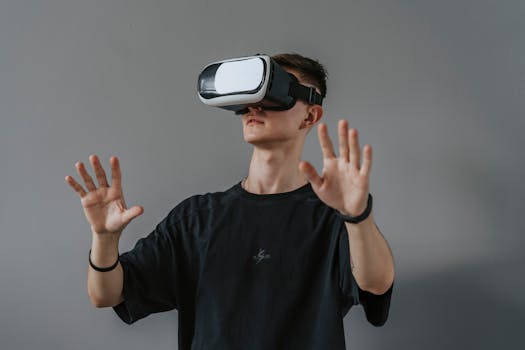 Photo: olia danilevich / Pexels
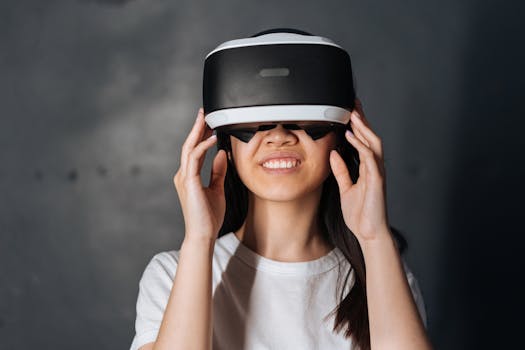 Photo: Mikhail Nilov / Pexels
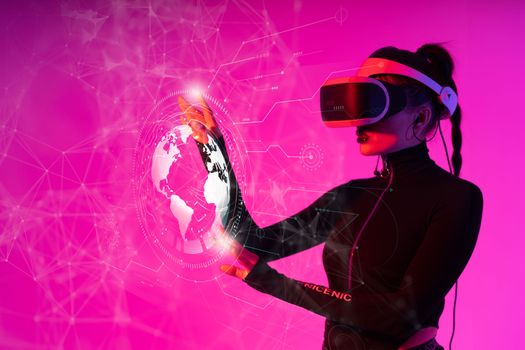 Photo: Atlantic Ambience / Pexels
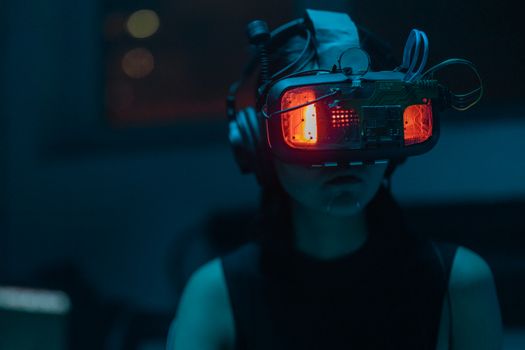 Photo: cottonbro studio / Pexels