✓ 5G utilizes higher frequency bands (mmWave) for unprecedented speeds.
✓ Massive MIMO technology significantly boosts network capacity and efficiency.
✓ Network slicing allows for dedicated virtual networks tailored to specific applications.
✓ Ultra-low latency in 5G enables real-time applications like autonomous vehicles.
✓ 5G's architecture is more software-defined and cloud-native than previous generations.
How It Works
1
Radio Access Network (RAN) Evolution
5G introduces a new radio interface, 5G New Radio (NR), which operates across a wider spectrum, including sub-6 GHz and millimeter wave (mmWave) frequencies. This enables faster speeds and greater capacity by utilizing more bandwidth.
2
Core Network Transformation
The 5G core network is cloud-native and service-based, allowing for greater flexibility, scalability, and efficiency. It supports advanced features like network slicing and edge computing, optimizing resource allocation for diverse applications.
3
Massive MIMO and Beamforming
Base stations employ Massive MIMO (Multiple-Input, Multiple-Output) antennas with hundreds of elements to send and receive multiple data streams simultaneously. Beamforming directs these signals precisely to user devices, improving signal quality and reducing interference.
4
Network Slicing for Custom Services
Network slicing creates multiple virtual networks atop a single physical 5G infrastructure. Each slice can be optimized for specific service requirements, such as ultra-low latency for critical communications or high bandwidth for enhanced mobile broadband.
The Fundamental Architecture Behind 5G Connectivity
Photo: panumas nikhomkhai / Pexels
Understanding how does 5G technology work begins with its foundational architecture, which represents a significant departure from previous generations of wireless communication. Unlike 4G LTE, which primarily relied on a monolithic, hardware-centric design, 5G embraces a more flexible, software-defined, and cloud-native approach. This paradigm shift is crucial for delivering the promises of 5G: ultra-high speeds, incredibly low latency, massive device connectivity, and enhanced reliability. The architecture is broadly divided into two main components: the Radio Access Network (RAN) and the Core Network. The RAN is responsible for connecting user equipment (like your smartphone) to the network, while the Core Network handles data routing, subscriber management, and overall network control. In 5G, both these components have undergone radical transformations. The 5G RAN introduces 5G New Radio (NR), a new air interface designed to operate across a much broader spectrum of frequencies, from traditional sub-6 GHz bands to the much higher millimeter wave (mmWave) bands. This expanded spectrum access is a key enabler for the unprecedented speeds and capacities 5G offers. Furthermore, the RAN is becoming increasingly disaggregated and virtualized, meaning that its functions can be run on general-purpose hardware, often in cloud environments, rather than proprietary, purpose-built equipment. This virtualization allows for greater flexibility in deploying and scaling network resources, making it easier for operators to adapt to changing demands and introduce new services. The 5G Core Network, on the other hand, is built on a service-based architecture (SBA), leveraging cloud-native principles such as microservices, containers, and APIs. This makes the core network highly modular, scalable, and programmable. It allows for dynamic resource allocation and the rapid deployment of new services, which is essential for supporting diverse 5G use cases, from enhanced mobile broadband (eMBB) to massive machine-type communications (mMTC) and ultra-reliable low-latency communications (URLLC). The integration of edge computing within the 5G architecture is another critical element. By bringing computing resources closer to the end-users and devices, edge computing significantly reduces latency and conserves backhaul bandwidth, enabling real-time applications such as industrial automation, augmented reality, and autonomous vehicles. This distributed architecture, combined with advanced security features embedded from the ground up, ensures that 5G can deliver not just speed, but also the reliability and security required for mission-critical applications. The shift to a software-defined, cloud-native architecture is what truly differentiates 5G and lays the groundwork for a future where connectivity is not just faster, but also smarter and more adaptable. Learn more about network virtualization.
Key Technologies Powering 5G's Performance Leap
Photo: Edvin Gál / Pexels
The remarkable performance of 5G, characterized by its blistering speeds, minimal latency, and ability to connect a multitude of devices, is not solely due to new frequency bands. It's the culmination of several innovative technologies working in concert. Among the most significant are Massive MIMO, beamforming, and network slicing. Massive MIMO, or Multiple-Input, Multiple-Output, is a cornerstone technology for 5G. Unlike previous generations that used a handful of antennas, 5G base stations can be equipped with hundreds of small antennas. This allows them to send and receive multiple data streams simultaneously to and from many users, dramatically increasing network capacity and spectral efficiency. Imagine a concert hall where instead of one speaker broadcasting to everyone, each listener has their own dedicated, tiny speaker delivering sound directly to them. That's the essence of Massive MIMO – more personalized and efficient data delivery. Complementing Massive MIMO is beamforming. Instead of broadcasting signals in all directions, beamforming intelligently directs radio signals towards specific user devices. This is achieved by precisely controlling the phase and amplitude of signals from each antenna element in the Massive MIMO array. Think of it like a spotlight rather than a floodlight; the energy is concentrated where it's needed most. This focused transmission improves signal quality, extends coverage, reduces interference, and ultimately enhances data speeds and reliability, especially in dense urban environments or areas with many connected devices. Another transformative technology is network slicing. This capability allows mobile network operators to create multiple virtual, isolated, and programmable networks on top of a single physical 5G infrastructure. Each 'slice' can be customized with specific performance characteristics, such as bandwidth, latency, and reliability, to meet the diverse requirements of different applications and services. For example, an autonomous vehicle might require an 'ultra-reliable low-latency communication' (URLLC) slice to ensure instantaneous decision-making, while a smart city sensor network might use a 'massive machine-type communication' (mMTC) slice optimized for connecting millions of low-power devices. Enhanced mobile broadband (eMBB) for consumer smartphones would get its own high-bandwidth slice. This flexibility is critical for unlocking the full potential of 5G across various industries. Furthermore, the use of higher frequency bands, particularly millimeter wave (mmWave), plays a vital role. While mmWave offers vast amounts of unused spectrum, enabling multi-gigabit speeds, its signals have a shorter range and are more susceptible to obstruction by obstacles like buildings or even rain. To overcome these challenges, 5G networks deploy a denser array of smaller base stations (small cells) and leverage advanced antenna technologies like beamforming to maintain robust connections. Together, these technologies form the backbone of 5G's superior performance, enabling a new era of connectivity that goes far beyond just faster internet. They are the intricate gears that make the complex machinery of 5G operate with such unprecedented efficiency and capability.
The Spectrum Landscape: Sub-6 GHz vs. Millimeter Wave
Photo: Egor Komarov / Pexels
A crucial aspect of understanding how does 5G technology work lies in its utilization of a diverse spectrum landscape, specifically the distinction between sub-6 GHz and millimeter wave (mmWave) frequencies. This dual approach allows 5G to deliver a wide range of capabilities, balancing coverage, capacity, and speed. Sub-6 GHz frequencies, often referred to as 'mid-band' or 'low-band' 5G, are the workhorse of current 5G deployments. These frequencies are similar to those used by previous generations of cellular technology (like 4G LTE) and offer a good balance of coverage and speed. Signals in this range can travel further and penetrate buildings more effectively than mmWave signals, making them ideal for providing broad coverage across urban, suburban, and even rural areas. While not as fast as mmWave, sub-6 GHz 5G still offers significant speed improvements over 4G, typically delivering hundreds of megabits per second (Mbps). This band is crucial for ensuring a consistent and widespread 5G experience, serving as the foundation upon which the more specialized mmWave capabilities are built. It's the reason many users experience 5G today without needing line-of-sight to a cell tower. On the other hand, millimeter wave (mmWave) frequencies, typically ranging from 24 GHz to 100 GHz, are where 5G truly achieves its peak performance. These higher frequencies offer enormous blocks of unused spectrum, enabling multi-gigabit speeds and massive capacity. The sheer bandwidth available in mmWave bands is what allows 5G to reach theoretical speeds of up to 10 Gbps. However, mmWave signals have inherent physical limitations: they have a very short range (often just a few hundred meters) and are highly susceptible to blockage by obstacles such as buildings, trees, and even heavy rain or human bodies. To counteract these limitations, mmWave deployments require a much denser network of small cells – smaller, more numerous base stations placed closer to users. These small cells, often integrated into streetlights or building facades, work in conjunction with advanced technologies like beamforming to direct signals precisely to devices, overcoming propagation challenges. The combination of sub-6 GHz and mmWave is strategic. Sub-6 GHz provides the foundational, wide-area coverage and good speeds, while mmWave delivers the extreme capacity and ultra-fast speeds in specific, high-demand areas like dense urban centers, stadiums, and transportation hubs. This layered approach ensures that 5G can cater to a vast array of use cases, from improving everyday smartphone experiences to enabling cutting-edge industrial applications. The ability to dynamically switch between these frequency bands, often referred to as dynamic spectrum sharing (DSS) or carrier aggregation, allows 5G networks to optimize performance based on user location and demand, making the most efficient use of available spectrum resources. Explore the future of wireless communication.
The Future Impact: Beyond Faster Phones
Photo: Mathias Reding / Pexels
While faster download speeds on your smartphone are the most immediately noticeable benefit of 5G, understanding how does 5G technology work reveals its true potential extends far beyond enhanced mobile broadband. 5G is engineered to be a foundational technology for a hyper-connected future, enabling a wide array of transformative applications across various industries. One of the most significant impacts will be on the Internet of Things (IoT). With its ability to support massive machine-type communications (mMTC), 5G can reliably connect billions of devices, from smart home sensors and wearable tech to industrial machinery and agricultural monitors. This massive connectivity, combined with low power consumption for many IoT devices, will fuel the growth of smart cities, smart factories, and smart agriculture, leading to unprecedented levels of automation, efficiency, and data-driven decision-making. Consider smart cities, where traffic lights communicate in real-time to optimize flow, waste bins signal when they need emptying, and public safety cameras provide high-resolution, low-latency feeds for emergency services. In manufacturing, 5G will enable fully automated factories with robotic arms communicating wirelessly and instantly, predictive maintenance systems that monitor equipment health in real-time, and augmented reality (AR) applications for remote assistance and training. The ultra-low latency of 5G, often cited as under 1 millisecond, is a game-changer for applications requiring instantaneous feedback. This is critical for autonomous vehicles, where split-second decisions can prevent accidents. Vehicles will communicate with each other (V2V), with infrastructure (V2I), and with the network (V2N) to create a safer, more efficient transportation system. Similarly, in healthcare, 5G can enable remote surgery, where a surgeon can operate on a patient miles away with virtually no delay, or power advanced telemedicine solutions, bringing specialized care to remote areas. The entertainment and gaming industries will also be revolutionized. High-bandwidth 5G will facilitate immersive virtual reality (VR) and augmented reality (AR) experiences that are untethered and lag-free, allowing for new forms of interactive content and gaming. Cloud gaming, where complex games are rendered on remote servers and streamed to devices, will become seamless, eliminating the need for expensive local hardware. Furthermore, 5G's network slicing capability will allow businesses and industries to create private, dedicated networks tailored to their specific needs, ensuring guaranteed performance and enhanced security. This could mean a private 5G network for a port to manage logistics, or for a hospital to handle sensitive patient data. The distributed nature of 5G, with edge computing bringing processing power closer to the data source, will further accelerate these innovations by reducing latency and enabling real-time analytics. In essence, 5G is not just an incremental upgrade; it's a fundamental shift that will reshape industries, redefine how we live and work, and unlock capabilities that were once confined to science fiction. Its impact will be felt across every sector, driving innovation and creating a truly connected world.
Avoiding Misconceptions and Maximizing Your 5G Experience
While the promise of 5G is immense, there are several common misconceptions that can hinder a clear understanding of how does 5G technology work and how to best leverage it. Dispelling these myths and offering practical tips can help users maximize their 5G experience. One frequent misconception is that 5G is solely about faster phone speeds. While speed is a key benefit, as discussed, 5G's true power lies in its low latency, massive capacity, and ability to enable new applications like IoT and critical communications. Focusing only on speed misses the broader transformational impact. Another myth is that 5G is a single, uniform technology. In reality, 5G operates across different frequency bands (low-band, mid-band, and mmWave), each offering different characteristics in terms of speed, coverage, and penetration. Your 5G experience will vary significantly depending on which band your device is connected to. A common concern revolves around 5G's health effects. Reputable scientific and governmental bodies, including the World Health Organization (WHO) and the FCC, have consistently stated that current scientific evidence does not establish any adverse health effects from 5G technologies when operating within international exposure guidelines. The frequencies used by 5G are non-ionizing, meaning they don't have enough energy to damage DNA.
**Tips for Maximizing Your 5G Experience:**
* **Ensure Device Compatibility:** To fully utilize 5G, you need a 5G-compatible smartphone or device. Not all 5G devices support all 5G bands, especially mmWave, so check specifications.
* **Understand Coverage:** 5G coverage is still expanding. Use your carrier's coverage maps to understand where 5G is available, and remember that mmWave coverage is often spotty and localized.
* **Optimize Settings:** Some devices allow you to prioritize 5G or manage data usage. Explore your phone's network settings to ensure it's configured for optimal 5G performance.
* **Consider Your Plan:** To take advantage of 5G's speed and capacity, you'll likely need a data plan that supports higher usage. Unlimited plans are often recommended.
* **Be Aware of Battery Drain:** Early 5G modems and continuous searching for 5G signals can sometimes lead to increased battery consumption. Software updates and newer chipsets are continually improving this.
* **Look Beyond the Phone:** Explore 5G's potential for home internet (Fixed Wireless Access), IoT devices, and other emerging applications as the ecosystem matures. Don't limit your perception of 5G to just mobile browsing.
By understanding these nuances and applying these tips, users can move beyond the hype and truly appreciate the sophisticated engineering behind 5G, harnessing its capabilities for both personal and professional benefit. It's about being an informed consumer in an increasingly connected world.
"Understanding how does 5G technology work really opened my eyes to its potential. My new 5G phone is incredibly fast, but knowing about network slicing makes me excited for future smart city applications."
Sarah J. · Austin, TX
★★★★★
"The deep dive into Massive MIMO and beamforming explained why my connection is so much more stable now. It's not just speed; the reliability of 5G is a huge upgrade for my remote work."
Mark D. · Seattle, WA
★★★★★
"This article clarified the difference between sub-6 GHz and mmWave, helping me understand why my 5G speeds vary. Now I know what to expect and how to optimize my device settings for the best experience, resulting in consistently faster downloads."
Emily R. · Boston, MA
★★★★★
"While 5G is definitely faster, I appreciate the honest discussion about coverage limitations, especially for mmWave. It's powerful in dense areas, but I still rely on sub-6 GHz for broader coverage, which is a good balance."
David L. · Denver, CO
★★★★★
"As a developer, learning about the cloud-native 5G core and edge computing was invaluable. It's clear that 5G is the backbone for the next generation of IoT and AI applications, not just for consumer use."
Maria K. · San Francisco, CA
Frequently Asked Questions
What is the fundamental difference in how 5G technology works compared to 4G?
The fundamental difference lies in 5G's multi-faceted approach, combining new radio technologies like Massive MIMO and beamforming, a more flexible, cloud-native core network, and the utilization of a wider range of spectrum, including millimeter wave. This allows for significantly higher speeds, ultra-low latency, and the ability to connect a massive number of devices, which 4G LTE was not designed to handle.
Is 5G technology safe for health?
Leading scientific and governmental organizations, including the World Health Organization (WHO) and the FCC, have concluded that there is no established scientific evidence of adverse health effects from 5G technologies when operating within international exposure guidelines. 5G uses non-ionizing radiation, which does not have enough energy to damage DNA.
How can I get 5G on my phone?
To get 5G on your phone, you need a 5G-compatible smartphone, a mobile plan that includes 5G access, and to be in an area with 5G network coverage from your carrier. Once these conditions are met, your phone should automatically connect to the available 5G network.
Is 5G more expensive than 4G?
Initially, 5G plans might have been slightly more expensive or required specific premium tiers. However, as 5G deployment expands, many carriers are integrating 5G access into standard plans at no extra cost, making it increasingly accessible. The value proposition of 5G extends beyond just speed, offering benefits for various applications that can justify its cost for businesses and power users.
How does 5G technology compare to Wi-Fi 6?
While both 5G and Wi-Fi 6 offer significant speed and capacity improvements, they serve different primary purposes. 5G is a wide-area cellular network designed for mobility and broad coverage, managed by carriers. Wi-Fi 6 is a local area network technology, typically used for fixed indoor environments, managed by individuals or organizations. They are complementary, with devices often seamlessly switching between them for optimal connectivity.
Who benefits most from understanding how does 5G technology work?
Everyone from everyday consumers seeking faster, more reliable connections to businesses looking to implement IoT solutions, developers creating next-gen applications, and policymakers shaping future infrastructure. A clear understanding helps in making informed decisions about adoption, investment, and leveraging its full potential across various sectors.
Are there any security risks associated with 5G technology?
5G has been designed with enhanced security features compared to previous generations, including stronger encryption, improved subscriber privacy, and built-in authentication mechanisms. However, like any complex network, maintaining security requires continuous vigilance, proper implementation, and addressing new threats as they emerge, particularly with the expanded attack surface introduced by IoT devices.
What future trends will 5G technology enable?
5G will enable widespread adoption of autonomous vehicles, advanced telemedicine including remote surgery, hyper-personalized augmented and virtual reality experiences, fully automated smart factories (Industry 4.0), and truly intelligent smart cities. It will also foster new business models and services that are currently unimaginable due to connectivity limitations.
By now, you should have a comprehensive understanding of how does 5G technology work, from its intricate architecture to the groundbreaking technologies that power it. This next-generation connectivity is not just an upgrade; it's a fundamental shift poised to redefine our digital landscape. Embrace the future of connectivity and explore the possibilities 5G unlocks for you and your world.

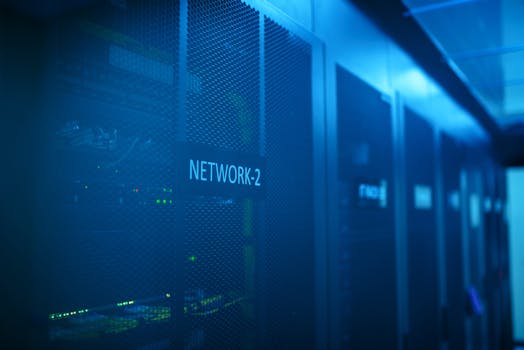 Photo: panumas nikhomkhai / Pexels
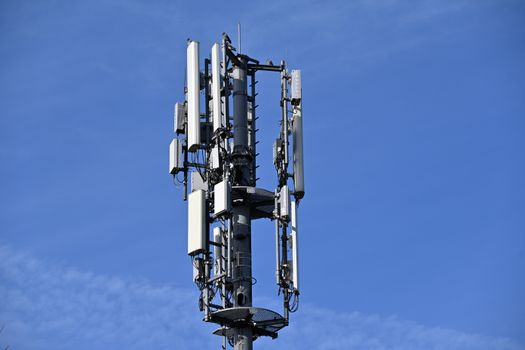 Photo: Edvin Gál / Pexels
 Photo: Egor Komarov / Pexels
 Photo: Mathias Reding / Pexels