How Does 5G Technology Work: The Ultimate Guide
how does 5g technology work

How Does 5G Technology Work: The Ultimate Guide

Abstract futuristic cyber landscape with digital matrix and glowing lights.Photo: Pachon in Motion / Pexels

How Does 5G Technology Work: The Ultimate Guide

Unravel the complex engineering behind 5G and understand its revolutionary impact on our connected world.

Explore 5G Now

Key Takeaways

  • ✓ 5G utilizes higher frequency bands for faster speeds and lower latency.
  • ✓ Network slicing allows dedicated virtual networks for specific applications.
  • ✓ Massive MIMO antennas significantly improve network capacity and efficiency.
  • ✓ Edge computing is crucial for processing data closer to the source, reducing delays.

How It Works

1
Data Transmission via Radio Waves

Like previous generations, 5G transmits data using radio waves. These waves carry information between your device and nearby cell towers, forming the backbone of wireless communication.

2
Diverse Frequency Spectrum Utilization

A key innovation in 5G is its ability to operate across a much wider range of frequencies. This includes low-band for coverage, mid-band for speed and coverage balance, and high-band (mmWave) for ultra-fast, short-range connections.

3
Advanced Antenna Technologies

5G employs advanced antenna systems like Massive MIMO (Multiple-Input Multiple-Output) and beamforming. These technologies enable precise targeting of signals, increasing capacity and reducing interference.

4
Software-Defined Networking & Edge Computing

The network architecture is fundamentally different, relying heavily on software-defined networking (SDN) and network function virtualization (NFV). This allows for dynamic resource allocation and the deployment of edge computing, bringing data processing closer to the user.

The Foundational Pillars of 5G Architecture
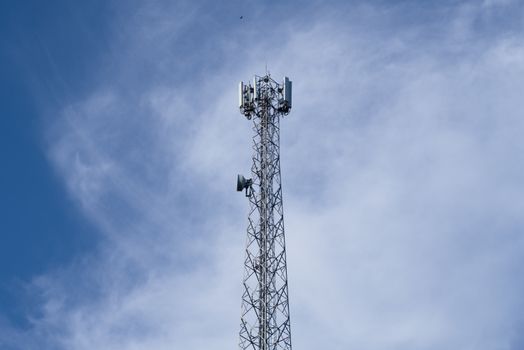
A tall metal communications tower stands against a backdrop of a clear blue sky with scattered clouds.Photo: Qeis Ismail / Pexels
Understanding how does 5G technology work begins with its revolutionary architecture, which departs significantly from its predecessors. Unlike 4G LTE, which largely relied on a centralized core network, 5G introduces a distributed, cloud-native design that is far more flexible and scalable. At its heart, 5G leverages a new radio access network (RAN) and a next-generation core network. The 5G RAN, often referred to as New Radio (NR), is designed to operate across a much broader spectrum of frequencies, including the previously underutilized millimeter-wave (mmWave) bands. This expanded spectrum is crucial for achieving the ultra-high speeds and massive capacity promised by 5G. Key architectural advancements include the disaggregation of hardware and software, allowing network functions to be virtualized and run on generic servers rather than specialized, proprietary equipment. This concept, known as Network Function Virtualization (NFV), makes the network more agile and easier to upgrade. Coupled with Software-Defined Networking (SDN), which separates the control plane from the data plane, operators can programmatically manage and optimize network traffic in real-time. This dynamic control is essential for supporting diverse services with varying requirements, from enhanced mobile broadband (eMBB) to ultra-reliable low-latency communication (URLLC) for critical applications. The core network, the 5G Core (5GC), is also cloud-native, built using microservices architecture. This modular approach allows for independent deployment and scaling of network functions, enhancing resilience and efficiency. It also facilitates seamless integration with other technologies like edge computing, bringing computational resources closer to the end-user. This foundational shift in architecture is what enables 5G to deliver its unprecedented performance characteristics, setting the stage for a truly transformative era of connectivity. For more on how these changes impact the broader telecommunications landscape, explore our guide on the evolution of wireless communication.

Unpacking the Spectrum: Low-Band, Mid-Band, and Millimeter Wave

A tall metal communications tower stands against a backdrop of a clear blue sky with scattered clouds.Photo: Qeis Ismail / Pexels
A critical aspect of how does 5G technology work lies in its intelligent utilization of the radio frequency spectrum, distinguishing it from previous generations that primarily operated on a narrower range. 5G is designed to operate across three main frequency bands, each with distinct characteristics and applications: low-band, mid-band, and high-band (millimeter wave, or mmWave). Low-band 5G, typically operating below 1 GHz, offers extensive coverage and penetrates buildings effectively, making it ideal for rural areas and widespread connectivity. While its speeds are comparable to advanced 4G LTE, its primary advantage is its ability to provide a foundational layer of 5G service across large geographical areas. It ensures that 5G connectivity is broadly accessible, even if not at peak speeds. Mid-band 5G, often in the 2.5 GHz to 6 GHz range, strikes a balance between coverage and speed. This band is crucial for urban and suburban environments, providing significantly faster speeds than low-band 5G and better capacity, making it suitable for most everyday mobile broadband uses, including streaming high-definition video and gaming. It offers a sweet spot for many consumers, delivering a noticeable performance boost over 4G without the extreme limitations of mmWave. Finally, high-band 5G, or mmWave, operating in frequencies above 24 GHz, is where 5G truly shines in terms of raw speed and low latency. These ultra-high frequencies allow for massive bandwidth, enabling multi-gigabit per second speeds. However, mmWave signals have a very short range, are easily obstructed by buildings, foliage, and even rain, and require a line of sight. Consequently, mmWave deployments are typically concentrated in dense urban areas, stadiums, and specific enterprise settings where extreme capacity and speed are paramount. The ability of 5G networks to intelligently hand off connections between these different bands, depending on user location and network congestion, is a sophisticated aspect of its operational design, optimizing performance for a wide array of scenarios and demonstrating the versatility inherent in how does 5G technology work.

Advanced Antenna Systems: Massive MIMO and Beamforming
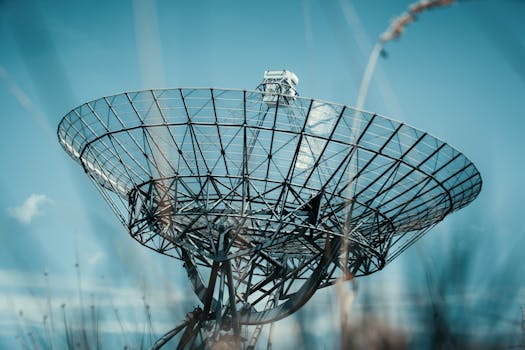
A large satellite dish tower set against a clear blue sky, symbolizing communication technology.Photo: Dylan Leagh / Pexels
Central to understanding how does 5G technology work are the innovations in antenna technology, particularly Massive MIMO (Multiple-Input Multiple-Output) and beamforming. These aren't just incremental improvements; they represent fundamental shifts in how wireless signals are transmitted and received, dramatically boosting network capacity, efficiency, and reliability. Traditional cellular antennas broadcast signals in a broad, indiscriminate manner, leading to wasted energy and potential interference. Massive MIMO, as its name suggests, involves equipping cell towers with a significantly larger number of antennas – sometimes hundreds – compared to the handful used in 4G. This abundance of antennas allows the base station to send and receive multiple data streams simultaneously to and from numerous users on the same frequency band. This parallel communication capability is a game-changer for network capacity, allowing many more devices to connect and transmit data without experiencing slowdowns. Complementing Massive MIMO is beamforming, a sophisticated signal processing technique. Instead of broadcasting signals widely, beamforming allows the base station to focus the radio signal into a narrow, directed beam specifically towards individual user devices. Think of it like a spotlight rather than a floodlight. This targeted transmission not only conserves energy but also minimizes interference with other users, ensuring a stronger, more reliable connection. For mmWave 5G, beamforming is absolutely critical due to the short range and susceptibility to obstruction of these high-frequency signals. By precisely directing the beam, the network can navigate around obstacles and maintain a robust link. Together, Massive MIMO and beamforming are pivotal in enabling the high speeds, low latency, and massive device connectivity that define 5G, fundamentally transforming the physics of wireless communication and showcasing the ingenuity behind how does 5G technology work. Learn more about the underlying principles of signal processing in our article on wireless communication protocols.

Network Slicing and Edge Computing: Enabling Future Applications

A tall metal communications tower stands against a backdrop of a clear blue sky with scattered clouds.Photo: Qeis Ismail / Pexels
Beyond speed and capacity, how does 5G technology work to enable entirely new categories of applications? The answer lies in two transformative concepts: network slicing and edge computing. Network slicing is a groundbreaking feature that allows mobile network operators to create multiple virtual, independent logical networks on top of a single physical 5G infrastructure. Each 'slice' can be customized with specific performance characteristics – such as bandwidth, latency, and reliability – to meet the unique demands of different applications or services. For instance, an autonomous vehicle might require a slice optimized for ultra-low latency and high reliability, while a smart city sensor network might need a slice designed for massive connectivity and low power consumption, and a video streaming service might demand high bandwidth. This flexibility means that 5G isn't just a faster internet connection; it's a platform that can be tailored to support the diverse needs of the Internet of Things (IoT), industrial automation, augmented reality (AR), and more, without compromising the performance of other services. Edge computing, another critical component, works in tandem with network slicing. Traditionally, data from devices travels all the way to a centralized cloud data center for processing. This introduces latency, which is unacceptable for real-time applications like remote surgery or augmented reality. Edge computing brings computational power and data storage much closer to the source of the data – at the 'edge' of the network, such as at a cell tower or a local data center. By processing data locally, the round-trip time for information exchange is drastically reduced, enabling ultra-low latency applications. This localized processing also reduces the amount of data that needs to be backhauled to the core network, saving bandwidth and improving efficiency. The combination of network slicing and edge computing transforms 5G from a simple communication pipe into an intelligent, programmable infrastructure capable of supporting the most demanding and innovative applications of the future, fundamentally reshaping the landscape of digital services and demonstrating the profound implications of how does 5G technology work.

Comparison

Feature5G4G LTE3G
Peak Download SpeedUp to 10 GbpsUp to 1 GbpsUp to 14 Mbps
Typical Latency1-5 ms30-50 ms100-200 ms
CapacityMassive (1M devices/km²)High (100K devices/km²)Low
Frequency SpectrumLow, Mid, High (mmWave)Low, MidLow

What Our Readers Say

5 ★★★★★

"Understanding how does 5G technology work really demystified why my phone feels so much faster. The article explained the different frequency bands clearly, making it easier to grasp why my experience varies in different parts of the city."

5 ★★★★★

"This guide on how does 5G technology work was incredibly comprehensive. The explanation of Massive MIMO and beamforming helped me appreciate the engineering marvel behind the seamless streaming I now enjoy on my commute."

5 ★★★★★

"I used to think 5G was just 'faster 4G,' but this article on how does 5G technology work totally changed my perspective. The section on network slicing opened my eyes to the potential for smart cities and autonomous vehicles, truly impressive."

4 ★★★★☆

"While the technical depth on how does 5G technology work was excellent, I wish there was a bit more on the current availability and rollout challenges in rural areas. Still, a very informative read, especially the part about edge computing."

5 ★★★★★

"As a developer, understanding how does 5G technology work, particularly network slicing and edge computing, is crucial for my projects. This article provided a solid foundation for exploring new application possibilities with ultra-low latency."

Frequently Asked Questions

What is the biggest difference between 5G and 4G, and how does 5G technology work to achieve it?
The biggest differences are significantly higher speeds, much lower latency, and greater capacity for connecting devices. 5G achieves this through a combination of using a wider range of frequency bands (including millimeter wave), employing advanced antenna technologies like Massive MIMO and beamforming, and implementing a new, cloud-native core network architecture that supports network slicing and edge computing.
Is 5G available everywhere, or are there limitations to its coverage?
No, 5G is not yet universally available. While coverage is expanding rapidly, its availability varies significantly by region and carrier. High-band (mmWave) 5G, which offers the fastest speeds, has a very limited range and struggles with obstructions, meaning it's primarily found in dense urban areas. Low-band 5G offers wider coverage but speeds comparable to advanced 4G. Mid-band 5G is becoming the sweet spot for balanced performance and coverage.
How can I check if my device and area support 5G, and how does 5G technology work on my phone?
To check if your device supports 5G, look for 5G compatibility in its specifications. Most newer smartphones are 5G-enabled. For area coverage, visit your mobile carrier's website and use their coverage map. On your phone, 5G works by connecting to nearby 5G cell towers using specific 5G radio bands, which your device's 5G modem handles. It dynamically switches between 5G and 4G as needed to maintain connectivity.
Is 5G more expensive than 4G, and what is the value proposition?
Initially, 5G plans might have been slightly more expensive or required specific premium tiers. However, as 5G becomes more widespread, many carriers are including 5G access in standard unlimited plans without a significant price premium. The value proposition lies in enhanced speed, lower latency for gaming and real-time applications, and the potential for new services like advanced IoT and AR/VR that 4G cannot adequately support.
How does 5G compare to Wi-Fi, and could 5G replace home internet?
5G and Wi-Fi serve different but increasingly overlapping purposes. 5G is a cellular technology designed for wide-area mobile connectivity, while Wi-Fi is primarily for local area networking. However, with 5G's high speeds and low latency, 5G Fixed Wireless Access (FWA) is emerging as a viable alternative to traditional wired home internet in many areas, offering competitive performance, especially where fiber isn't available.
Who benefits most from understanding how does 5G technology work?
Everyone can benefit from understanding 5G, but it's particularly valuable for tech enthusiasts, professionals in telecommunications, IT, and related industries, developers planning future applications, and businesses looking to leverage 5G's capabilities for digital transformation. Consumers can also make more informed decisions about devices and plans.
Are there any health concerns related to 5G, and how does 5G technology work in terms of safety?
Extensive research by organizations like the World Health Organization (WHO) and the FCC indicates that 5G technology, like previous generations of wireless communication, operates within established safety limits for radiofrequency exposure. The frequencies used by 5G are non-ionizing, meaning they do not have enough energy to damage DNA or cells, unlike X-rays. Current scientific evidence does not support claims of adverse health effects from 5G.
What future trends are expected from 5G, and how does 5G technology work to enable them?
Future trends include the proliferation of the Internet of Things (IoT), advanced autonomous systems (vehicles, drones), immersive AR/VR experiences, smart cities, and industrial automation (Industry 4.0). 5G enables these by providing the necessary high bandwidth, ultra-low latency, and massive device connectivity, supported by network slicing for customized service delivery and edge computing for real-time data processing.

Now that you understand how does 5G technology work, you're equipped to navigate the future of connectivity. Embrace the possibilities this revolutionary technology offers, from lightning-fast downloads to transformative new applications. Your digital world is about to get a major upgrade.

Topics: how does 5g technology work5G architecturemillimeter wave 5G5G network slicinglow latency 5G
Leo List
Brampton weed
Adultwork