What is 5G Network Technology? Your Ultimate Guide
August 20, 2026 14 min read 2,852 words
Unravel the mysteries of 5G, the fifth generation of cellular technology, and its transformative potential for a connected world.
Explore 5G Now
Understanding the Foundation: What is 5G Network Technology?
 Photo: panumas nikhomkhai / Pexels
The advent of 5G network technology marks a pivotal moment in the evolution of global connectivity, representing the fifth generation of cellular broadband. It’s not merely an incremental upgrade from 4G LTE but a fundamental reimagining of wireless communication, designed to support a vastly more interconnected and data-intensive future. At its core, 5G is engineered to deliver unprecedented speeds, ultra-low latency, and massive capacity, far exceeding the capabilities of its predecessors. This leap in performance isn't just about faster downloads on your smartphone; it's about enabling a new era of technological innovation, from truly autonomous vehicles to highly responsive industrial automation and immersive augmented reality experiences.
Exploring the history of mobile networks helps us appreciate the scale of this advancement. Unlike 4G, which primarily focused on enhancing mobile internet access, 5G is built from the ground up to be a versatile platform for diverse applications, including the Internet of Things (IoT), critical communications, and enhanced mobile broadband. It operates across a wider spectrum of frequencies, leveraging everything from low-band (similar to 4G) for broad coverage, to mid-band for a balance of speed and range, and high-band (mmWave) for blistering-fast speeds in dense urban areas. This multi-spectrum approach is key to 5G's flexibility and ability to cater to different use cases. The architectural changes are also significant. 5G introduces concepts like network slicing, which allows operators to create virtual, customized networks tailored to specific applications or industries, each with its own dedicated resources and quality of service guarantees. This means a self-driving car could have a 'slice' of the network guaranteeing ultra-low latency for safety, while a smart home system could have another slice optimized for massive device connectivity. This level of customization and resource allocation was largely impossible with previous generations. Furthermore, 5G utilizes advanced antenna technologies, such as Massive MIMO (Multiple-Input Multiple-Output), which employs a large number of antennas at the base station to serve multiple users simultaneously, dramatically increasing capacity and efficiency. Beamforming, another critical innovation, directs wireless signals precisely towards user devices, improving signal quality and extending range, especially for higher frequency bands. These technical advancements collectively empower 5G to unlock potential applications that were once confined to science fiction, promising a future where seamless, instantaneous connectivity is the norm, transforming industries and daily life alike. The deployment of 5G infrastructure is a massive undertaking, involving significant investment in new cell towers, small cells, and fiber optic backbones, but the long-term benefits in economic growth and technological advancement are expected to be profound.
Unpacking the Core Benefits: Speed, Latency, and Capacity
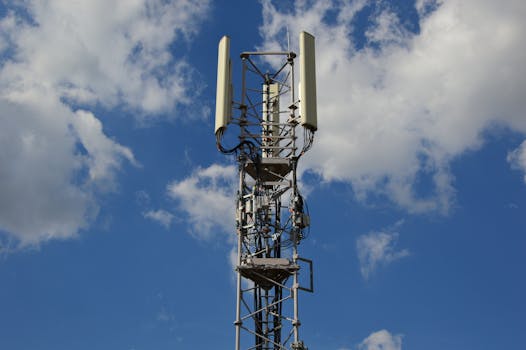 Photo: Ulrick Trappschuh / Pexels
The allure of 5G network technology lies squarely in its three primary performance pillars: unparalleled speed, dramatically reduced latency, and vastly expanded capacity. These aren't just technical specifications; they are the bedrock upon which future innovations will be built, fundamentally altering how we interact with technology and the world around us. Let's delve into each of these benefits to truly grasp the transformative power of 5G. First, speed. When we talk about 5G speed, we're not just talking about incremental improvements. Peak theoretical speeds can reach up to 10 gigabits per second (Gbps), which is roughly 100 times faster than typical 4G LTE speeds. In practical terms, this means downloading a full-length HD movie in mere seconds, rather than minutes. This ultra-fast data transfer is critical for applications demanding high bandwidth, such as 8K video streaming, virtual reality (VR), and augmented reality (AR) experiences that require massive amounts of data to be processed and transmitted instantly. It will also revolutionize cloud computing, making cloud-based applications feel as responsive as if they were running locally on your device. The implications for industries like entertainment, education, and even remote work are immense, enabling seamless access to rich media and complex datasets from virtually anywhere. Second, latency. Perhaps even more impactful than speed is 5G's ultra-low latency. Latency refers to the time delay between when a signal is sent and when it is received. While 4G typically offers latency around 50-100 milliseconds, 5G aims for latency as low as 1 millisecond. This near real-time responsiveness is a game-changer for critical applications. Consider autonomous vehicles: for a self-driving car to react safely to sudden obstacles or traffic changes, it needs to communicate with other vehicles and infrastructure with virtually no delay. Similarly, remote surgery, industrial automation, and haptic feedback systems require instant responses to function effectively and safely. This low latency enables immediate feedback and control, opening doors for innovations that were previously constrained by network delays. Third, capacity. 5G is designed to handle a massive increase in the number of connected devices, a crucial factor given the explosive growth of the Internet of Things (IoT). While 4G struggled to efficiently manage more than a few thousand devices per square kilometer, 5G can support up to one million devices per square kilometer. This exponential increase in capacity is vital for smart cities, smart homes, and smart factories, where billions of sensors, cameras, and devices will be constantly collecting and transmitting data. Imagine a city where every street light, trash can, and public transport vehicle is connected, providing real-time data for optimized services and improved urban living. This massive capacity ensures that the network won't become congested, even with an ever-growing number of connected gadgets and sensors. Together, these three pillars – speed, low latency, and massive capacity – transform 5G from a mere communication tool into a foundational technology platform. It's the infrastructure that will enable the next wave of digital transformation, fostering innovation across every sector and reshaping our digital landscape.
Transformative Applications: How 5G is Reshaping Industries and Daily Life
 Photo: Pixabay / Pexels
The true promise of what is 5G network technology extends far beyond faster phone speeds; it lies in its ability to unlock groundbreaking applications across virtually every sector, fundamentally reshaping industries and enhancing daily life in ways we are only just beginning to comprehend. The combination of ultra-high speeds, minimal latency, and vast capacity creates an environment ripe for innovation, enabling technologies that were once theoretical to become practical realities. One of the most talked-about applications is in the realm of autonomous vehicles. 5G's near real-time communication capabilities are essential for vehicle-to-vehicle (V2V) and vehicle-to-infrastructure (V2I) communication, allowing cars to share information about road conditions, traffic, and potential hazards almost instantaneously. This vital exchange of data is crucial for ensuring the safety and efficiency of self-driving cars, paving the way for a future with fewer accidents and smoother traffic flow. In healthcare, 5G promises to revolutionize telemedicine and remote surgery. Doctors will be able to perform complex procedures from thousands of miles away, guided by real-time video and haptic feedback, making specialized care accessible to remote populations. Wearable health monitors, powered by 5G, will continuously track vital signs and send data to healthcare providers, enabling proactive interventions and personalized medicine. This could lead to earlier diagnosis, more effective treatments, and better health outcomes for millions. The manufacturing sector is also poised for a massive overhaul through what is known as Industry 4.0. 5G-enabled smart factories will leverage a dense network of IoT sensors, robots, and AI to monitor production lines, predict maintenance needs, and optimize workflows in real-time. This leads to increased efficiency, reduced downtime, and greater flexibility in manufacturing processes. Imagine a factory floor where machines communicate seamlessly, adjusting their operations based on immediate demand, leading to unprecedented levels of productivity and customization.
Understanding the Internet of Things (IoT) is crucial to grasping this transformation. For consumers, 5G will bring about more immersive entertainment and communication experiences. Enhanced mobile broadband will make cloud gaming indistinguishable from console gaming, and virtual reality (VR) and augmented reality (AR) applications will become truly mobile and untethered, offering rich, interactive experiences without lag. Imagine attending a virtual concert with friends from across the globe, feeling as if you're truly there, or experiencing a holographic meeting with colleagues. Smart cities will also be a major beneficiary. 5G will power interconnected urban infrastructure, from intelligent traffic lights that adapt to real-time traffic flow, to smart utility grids that optimize energy distribution, and connected public safety systems that enhance emergency response. This will lead to more sustainable, efficient, and livable urban environments. The potential for innovation spans education, agriculture, logistics, and countless other fields, promising a future where connectivity is not just a convenience, but a fundamental driver of progress and improved quality of life.
Navigating the 5G Landscape: Challenges, Deployment, and Future Outlook
 Photo: Durgesh Kumar / Pexels
While the benefits of 5G network technology are profound, its widespread deployment and full realization are not without significant challenges. Understanding these hurdles, alongside the ongoing rollout efforts, provides a realistic perspective on the future of this transformative technology. One of the primary challenges lies in infrastructure deployment. 5G, particularly the ultra-fast mmWave spectrum, requires a much denser network of antennas and small cells compared to 4G. These small cells need to be installed on lampposts, buildings, and other urban furniture, often requiring complex permitting processes and significant capital investment. The sheer scale of this infrastructure build-out across the United States is immense and time-consuming. Additionally, securing fiber optic backhaul to connect these small cells to the core network is crucial, as the increased data traffic demands robust wired connections. Another challenge involves the economic viability and return on investment for carriers. While the potential applications are vast, monetizing these services, especially for enterprise and industrial use cases, requires new business models and partnerships. Convincing businesses to invest in 5G-enabled solutions requires demonstrating clear ROI and tangible benefits. Spectrum availability and allocation also present ongoing challenges, as different frequency bands offer varying trade-offs between speed, range, and penetration. Regulatory bodies play a critical role in allocating this valuable resource, which can influence the pace and nature of 5G development. Despite these challenges, the deployment of 5G is progressing rapidly across the US. Major carriers are continuously expanding their 5G footprints, with a focus on both broad low-band coverage and targeted mid-band and mmWave deployments in urban centers. Consumers are increasingly adopting 5G-compatible devices, and the ecosystem of 5G-enabled products and services is growing. Looking to the future, 5G is not a static technology. It will continue to evolve with new releases and standards, moving towards what is often referred to as '5G Advanced' and eventually 6G. These future iterations will further enhance capabilities, pushing the boundaries of speed, latency, and connectivity. We can expect even more sophisticated AI integration, greater energy efficiency, and new features designed to support emerging technologies like holographic communication and hyper-realistic digital twins. Moreover, the convergence of 5G with other cutting-edge technologies, such as edge computing, artificial intelligence, and blockchain, will unlock entirely new possibilities. Edge computing, for instance, allows data processing to happen closer to the source, reducing reliance on centralized cloud servers and further minimizing latency, especially critical for real-time applications. The long-term outlook for 5G is overwhelmingly positive. While the journey to ubiquitous, full-potential 5G is ongoing, its foundational capabilities are already setting the stage for a digitally transformed world. It's not just about faster internet; it's about building a robust, intelligent, and flexible network infrastructure that will power the innovations of tomorrow, driving economic growth and societal advancement for decades to come. The initial investment and challenges are significant, but the potential rewards in terms of efficiency, innovation, and quality of life make the effort worthwhile.
