
What is 5G Technology Explained: Your Ultimate Guide
5G technology explained

What is 5G Technology Explained: Your Ultimate Guide

Dive deep into the revolutionary world of 5G and understand how it's poised to transform connectivity.

Explore 5G Now

Key Takeaways

  • ✓ 5G is the fifth generation of cellular technology.
  • ✓ It promises speeds up to 100 times faster than 4G.
  • ✓ Ultra-low latency is a defining characteristic of 5G.
  • ✓ 5G enables massive connectivity for IoT devices.

How It Works

1
New Radio Frequencies

5G utilizes a broader spectrum of radio frequencies, including millimeter-wave (mmWave), mid-band, and low-band. This allows for significantly higher bandwidth and capacity compared to previous generations.

2
Massive MIMO Antennas

Massive Multiple-Input, Multiple-Output (MIMO) technology employs many more antennas on base stations. This allows them to transmit and receive data from multiple users simultaneously, boosting efficiency and speed.

3
Beamforming Techniques

Beamforming focuses radio signals into a narrow, directed beam towards specific user devices. This reduces interference and improves signal quality, especially in dense urban environments, optimizing connection stability.

4
Network Slicing & Edge Computing

Network slicing allows operators to create virtual, dedicated networks tailored for specific applications. Edge computing processes data closer to the source, reducing latency and enabling real-time applications.

Understanding the Core Pillars of 5G Technology
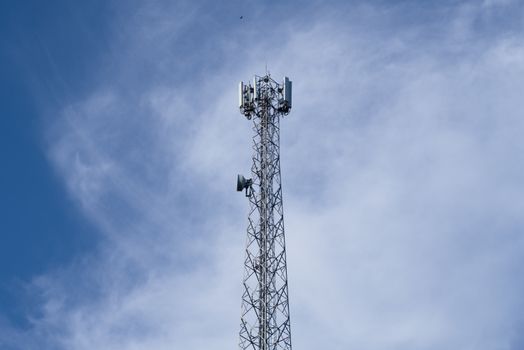
A tall metal communications tower stands against a backdrop of a clear blue sky with scattered clouds. Photo: Qeis Ismail / Pexels
To truly grasp what is 5G technology explained, we must delve into its foundational elements that differentiate it from its predecessors. At its heart, 5G is not merely a faster version of 4G; it's a paradigm shift in wireless communication, designed to support a future where everything is connected and real-time responsiveness is paramount. The three main pillars defining 5G’s capabilities are enhanced Mobile Broadband (eMBB), Ultra-Reliable Low Latency Communications (URLLC), and Massive Machine Type Communications (mMTC). eMBB is perhaps the most immediately noticeable benefit for consumers, promising incredibly high speeds and much greater bandwidth. This means downloading full-length movies in seconds, seamless 4K/8K video streaming, and lag-free cloud gaming on the go. Imagine a world where your smartphone connectivity rivals or even surpasses your home fiber optic internet. This enhanced capacity is crucial for supporting the ever-increasing data demands of a connected society, from augmented reality (AR) and virtual reality (VR) applications to high-definition video conferencing. URLLC is where 5G truly innovates beyond mere speed. It's designed for applications that require critical, instantaneous communication with virtually no delay. Think about autonomous vehicles communicating with each other and with roadside infrastructure – milliseconds of delay could mean the difference between safety and disaster. Similarly, remote surgery, industrial automation, and smart grid management all rely on this ultra-low latency to function effectively and safely. The goal for URLLC is latencies as low as 1 millisecond, a stark contrast to the tens of milliseconds typically seen in 4G networks. This level of responsiveness opens up entirely new possibilities for real-time control and interaction. Finally, mMTC addresses the explosion of connected devices, often referred to as the Internet of Things (IoT). With billions of sensors and devices expected to come online in the coming years, 5G is engineered to support a massive number of connections per square kilometer, far exceeding 4G's capacity. This means smart cities with interconnected traffic lights, environmental sensors, and utility meters; smart homes with countless automated devices; and smart agriculture with sensors monitoring soil conditions and crop health. These devices often transmit small packets of data intermittently, and mMTC is optimized to handle this efficiently, ensuring that even the smallest sensor can stay connected without draining network resources. Understanding these three pillars is fundamental to appreciating the transformative potential of 5G across various sectors. For more insights into how these technologies are shaping our world, explore the evolution of wireless communication.

The Transformative Impact of 5G on Industries and Daily Life

A tall metal communications tower stands against a backdrop of a clear blue sky with scattered clouds. Photo: Qeis Ismail / Pexels
The implications of 5G technology extend far beyond faster phone downloads; it's a foundational technology that will reshape industries and fundamentally alter our daily experiences. Its unique combination of speed, low latency, and massive connectivity creates a fertile ground for innovation across virtually every sector. In healthcare, 5G promises to revolutionize telemedicine, enabling real-time remote diagnostics and even robotic surgeries with haptic feedback, breaking down geographical barriers to quality care. Wearable health monitors will transmit vital signs continuously and reliably, allowing for proactive health management and emergency alerts. The ability to quickly transfer large medical imaging files will also significantly improve diagnostic processes. The manufacturing sector is poised for a significant transformation with the advent of 'Industry 4.0,' powered by 5G. Factories will become smarter, with interconnected robots, automated guided vehicles (AGVs), and vast arrays of sensors communicating wirelessly in real time. This will lead to increased efficiency, predictive maintenance, and highly flexible production lines that can be reconfigured on the fly. Digital twins – virtual replicas of physical systems – will become more prevalent, allowing for advanced simulations and optimizations. The precision and reliability of URLLC are critical here, ensuring that machines can operate autonomously and safely without human intervention. For transportation, 5G is the backbone of the intelligent transport systems of the future. Autonomous vehicles will rely on 5G for vehicle-to-vehicle (V2V) and vehicle-to-infrastructure (V2I) communication, enabling coordinated movements, accident prevention, and optimized traffic flow. Smart traffic lights, real-time navigation updates, and even drone delivery services will all benefit from the low latency and high bandwidth that 5G provides. This will not only make our roads safer but also significantly reduce congestion and environmental impact. In our daily lives, 5G will usher in an era of truly immersive entertainment and personalized experiences. Augmented reality (AR) and virtual reality (VR) will move beyond niche applications to become mainstream, offering realistic gaming, interactive learning environments, and virtual tourism without the current limitations of lag and tethered devices. Smart homes will become even smarter, with seamless integration of devices, intelligent energy management, and proactive security systems. Even public spaces will transform into smart environments, offering real-time information, personalized advertising, and enhanced safety features. The pervasive connectivity of 5G will make our cities more responsive, our homes more intuitive, and our interactions more dynamic.

5G vs. 4G: A Deeper Dive into the Technological Leap
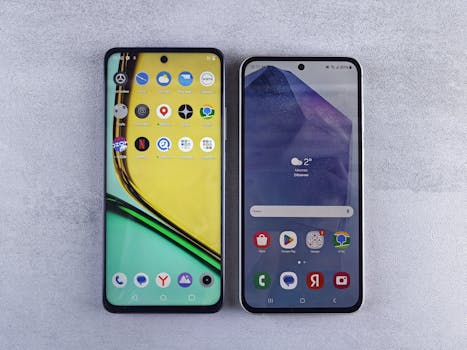
Top-down view of two modern smartphones with home screens displayed on a textured surface. Photo: Andrey Matveev / Pexels
While it's easy to view 5G as merely an upgrade to 4G, a closer examination reveals a fundamental architectural and technological leap. The differences extend far beyond download speeds and impact every aspect of network performance and capability. The most frequently cited distinction is speed. Where 4G LTE typically offers peak speeds of tens to a hundred megabits per second (Mbps), 5G promises theoretical peak speeds of up to 10 gigabits per second (Gbps), which is an order of magnitude faster. Even average 5G speeds are significantly higher, allowing for instant downloads and ultra-high-definition streaming without buffering. This speed is achieved through a combination of using higher frequency bands (like millimeter-wave), wider bandwidth channels, and more efficient encoding techniques. Latency is another critical differentiator. 4G networks typically have a latency of around 50-100 milliseconds. While acceptable for web browsing and video calls, this delay is too high for mission-critical applications. 5G aims for ultra-low latency, targeting as low as 1 millisecond. This near real-time responsiveness is what unlocks the potential for autonomous vehicles, remote surgery, industrial automation, and other applications where instantaneous feedback is essential. This reduction in latency is achieved through innovations like edge computing, where data processing is moved closer to the user, and network slicing, which dedicates network resources to specific applications. Network capacity also sees a massive improvement. 4G networks struggle to handle the sheer volume of connected devices, especially in dense areas. 5G is designed to support up to one million devices per square kilometer, a tenfold increase over 4G. This massive capacity is crucial for the proliferation of IoT devices, from smart city sensors to connected home appliances, ensuring that all devices can communicate effectively without overwhelming the network. This is facilitated by technologies like Massive MIMO (Multiple-Input, Multiple-Output) and beamforming, which allow base stations to serve many more users simultaneously and efficiently. Furthermore, 5G employs a more flexible and software-defined network architecture. This allows for 'network slicing,' where operators can create virtual, isolated networks on the same physical infrastructure, each optimized for different services (e.g., one slice for ultra-low latency industrial control, another for high-bandwidth video streaming). This level of customization and flexibility was not possible with 4G's more rigid architecture. The transition from 4G to 5G represents not just an incremental improvement but a foundational shift that enables a truly connected and intelligent future. For a deeper dive into how these generations compare, check out the evolution of mobile networks.

Navigating the Challenges and Future Outlook of 5G Deployment

A tall metal communications tower stands against a backdrop of a clear blue sky with scattered clouds. Photo: Qeis Ismail / Pexels
While the promise of 5G is immense, its widespread deployment and full realization are not without significant challenges. Understanding these hurdles is crucial for a realistic perspective on the technology's future. One of the primary obstacles is infrastructure rollout. 5G, particularly the high-speed millimeter-wave (mmWave) spectrum, requires a much denser network of small cells compared to 4G's larger cell towers. These small cells have a shorter range and are more susceptible to physical obstructions like buildings and even leaves, necessitating a vast investment in new hardware and site acquisition. This infrastructure build-out is a time-consuming and expensive endeavor, particularly in rural or sparsely populated areas. Another challenge lies in spectrum availability and allocation. Different countries and regions have different approaches to spectrum licensing, which can impact the speed and type of 5G services offered. The optimal use of low-band, mid-band, and high-band (mmWave) frequencies needs careful planning to balance coverage, speed, and capacity. Furthermore, security concerns are paramount. As 5G connects an unprecedented number of devices and critical infrastructure, the attack surface expands dramatically. Robust security protocols and constant vigilance are necessary to protect against cyber threats and ensure the integrity of data and services. Consumer adoption and understanding also present a challenge. While early adopters are eager for 5G, many consumers may not immediately see the need for such high speeds or perceive the value beyond current 4G capabilities, especially if coverage is limited or device costs are high. Educating the public about the transformative applications beyond simple speed increases is vital for widespread acceptance. Despite these challenges, the future outlook for 5G is overwhelmingly positive. We can expect continued advancements in network optimization, including more sophisticated AI-driven network management and further integration with edge computing. The development of new 5G-enabled devices, from advanced smartphones to specialized IoT sensors, will accelerate. As the network matures, we will see the emergence of entirely new applications and services that are unimaginable with current technology, particularly in areas like holographic communication, fully immersive metaverse experiences, and highly personalized smart environments. The journey to a fully 5G-enabled world is ongoing, but the trajectory points towards a future of unprecedented connectivity and innovation. **Key Considerations for 5G Deployment:** * **Infrastructure Investment:** Significant capital is required for dense small cell deployment. * **Spectrum Harmonization:** Coordinated global spectrum allocation is vital for seamless operation. * **Cybersecurity:** Enhanced measures are needed to protect expanded attack surfaces. * **Energy Efficiency:** Optimizing network power consumption for sustainability. * **Regulatory Frameworks:** Adapting policies to support rapid deployment and innovation. * **Public Education:** Informing consumers about 5G's benefits beyond speed. * **Interoperability:** Ensuring devices and networks from various vendors work together seamlessly.

Comparison

Feature5G4G LTE3G
Peak Speed (Theoretical)Up to 10 GbpsUp to 100 MbpsUp to 14 Mbps
Typical Latency1-5 ms50-100 ms100-250 ms
Device Density (per sq km)1,000,000+100,000Limited
Network Slicing
Edge Computing Support
Primary Application FocusIoT, AR/VR, Autonomous SystemsMobile Broadband, StreamingVoice, Basic Data

What Readers Say

"Understanding what is 5G technology explained here really clarified its potential. My new phone's 5G speed is incredible for streaming and gaming, no more buffering ever!"

Sarah J. · Austin, TX

"This article broke down 5G's impact on industries, especially smart manufacturing, in a way I could easily understand. It's clear this isn't just about faster phones, but a whole new era of connectivity."

Mark D. · Seattle, WA

"After reading this, I finally get the difference between 4G and 5G beyond just 'faster.' The section on ultra-low latency for autonomous cars really clicked, showing real-world safety benefits."

Emily R. · Miami, FL

"Very informative and thorough explanation of 5G. While the benefits are clear, the challenges section was a valuable addition, providing a balanced view of its rollout."

David K. · Chicago, IL

"As a developer working with IoT, this explanation of what is 5G technology explained is extremely helpful. The massive machine type communication pillar is exactly what we need for scalable smart city solutions."

Jessica L. · Denver, CO

Frequently Asked Questions

What is the main benefit of 5G over 4G?

The main benefits of 5G over 4G are significantly higher speeds (up to 10 Gbps), ultra-low latency (as low as 1 ms), and massive capacity for connecting many more devices. This combination enables new applications like autonomous vehicles, advanced IoT, and immersive AR/VR experiences that 4G cannot reliably support.

Is 5G safe for my health?

Yes, major national and international health organizations, including the World Health Organization (WHO) and the FCC, have stated that 5G technology, when operating within established safety guidelines, is safe and does not pose a health risk. The radiofrequency emissions are well within acceptable limits.

How can I get 5G service?

To get 5G service, you need a 5G-compatible device (like a 5G smartphone) and a service plan from a carrier that offers 5G in your area. Coverage is expanding rapidly, but it's still advisable to check your carrier's coverage map for availability in your specific location.

Is 5G more expensive than 4G?

Initially, 5G devices and plans might have been slightly more expensive, but as 5G becomes more widespread, the costs are rapidly converging with 4G. Many carriers now offer 5G access as part of standard plans, and 5G-compatible phones are available across various price points, making it increasingly accessible.

How does 5G impact the Internet of Things (IoT)?

5G profoundly impacts IoT by providing the necessary foundation for massive device connectivity, ultra-low latency, and high bandwidth. This means billions of IoT devices can communicate reliably and efficiently, enabling truly smart cities, advanced industrial automation, and highly responsive smart home ecosystems that were previously impossible.

Who should use 5G technology explained?

Anyone looking for faster downloads, smoother streaming, and lower lag in mobile gaming will benefit from 5G. Beyond consumers, industries like manufacturing, healthcare, transportation, and entertainment will find 5G essential for developing and deploying next-generation applications and services that require high speed, low latency, and massive connectivity.

Are there any privacy concerns with 5G?

While 5G itself doesn't inherently create new privacy vulnerabilities, its ability to connect more devices and collect more data at higher speeds means that existing data privacy practices become even more critical. Network operators and device manufacturers are implementing advanced security features, but users should remain vigilant about data sharing permissions for connected devices.

What are the future trends for 5G?

Future trends for 5G include further expansion of coverage, increased integration with AI and edge computing for more intelligent networks, the development of 5G Advanced (an evolution towards 6G), and the emergence of entirely new applications in areas like holographic communication, extended reality (XR), and highly personalized smart environments.

Now that you have a comprehensive understanding of what is 5G technology explained, it's time to consider how this revolutionary technology will impact your life and work. Embrace the future of connectivity and explore how 5G can unlock new possibilities for you.

Topics: 5G technology explained5G network benefitsfuture of 5G5G applications5G vs 4G
Leo List
Brampton weed
Adultwork EstrelaBet Vai de Bet R7 Bet Betão Galera Bet Rainbet Bet9ja Shop SportyBet BetKing Sisal Loto Foot Hollywoodbets YesPlay Odibets RushBet Jugabet BetWarrior BetCity MSport betPawa Fortebet