✓ Quantum computers use 'qubits' instead of classical bits, allowing for superposition and entanglement.
✓ They can process vast amounts of data simultaneously, tackling problems intractable for classical computers.
✓ Major applications include drug discovery, materials science, financial modeling, and cryptography.
✓ The technology is still in its early stages but holds immense promise for the future.
How It Works
1
Qubits: The Quantum Bit
Unlike classical bits (0 or 1), qubits can exist in multiple states simultaneously (0, 1, or both). This phenomenon is called superposition, enabling exponential processing power.
2
Superposition and Entanglement
Superposition allows qubits to represent various possibilities at once. Entanglement links qubits so their states are dependent, even when physically separated, enhancing computational power.
3
Quantum Gates and Algorithms
Quantum gates are analogous to logic gates in classical computing, manipulating qubit states. Quantum algorithms leverage superposition and entanglement to solve complex problems more efficiently.
4
Measurement and Output
When a quantum computation is complete, the qubits are measured, collapsing their superposition into a definite state (0 or 1). This final state provides the probabilistic solution to the problem.
Understanding the Fundamentals of Quantum Physics
Photo: Pachon in Motion / Pexels
To truly grasp what is quantum computing explained, one must first dip their toes into the peculiar world of quantum physics. At its core, quantum computing harnesses phenomena observed at the atomic and subatomic levels, phenomena that defy our everyday intuition. Classical computers operate on bits, which represent information as either a 0 or a 1. This binary system is the foundation of all modern digital technology. However, quantum computers introduce a revolutionary concept: the qubit. A qubit, or quantum bit, isn't limited to a single state. Thanks to a principle called superposition, a qubit can exist as a 0, a 1, or a combination of both simultaneously. Imagine a coin spinning in the air – it's neither heads nor tails until it lands. A qubit is like that spinning coin, holding all possibilities at once. This ability to be in multiple states simultaneously is what gives quantum computers their immense potential for processing power. If you have two qubits, they can represent four states at once; with three, eight states, and so on. This exponential increase in processing capacity with each additional qubit is a game-changer. Beyond superposition, another key quantum phenomenon is entanglement. Entanglement occurs when two or more qubits become linked in such a way that they share the same fate, regardless of the distance separating them. If you measure the state of one entangled qubit, you instantly know the state of its partner, even if it's light-years away. Einstein famously called this 'spooky action at a distance.' For quantum computing, entanglement is crucial because it allows qubits to work together in a highly coordinated manner, enabling complex computations that would be impossible for classical machines. These fundamental principles – superposition and entanglement – are the bedrock upon which quantum computing is built, allowing for entirely new ways to store and process information. Understanding these concepts is the first step in appreciating the profound implications of this emerging technology. For a deeper dive into the underlying science, explore quantum mechanics basics.
The Architecture of a Quantum Computer
Photo: Pok Rie / Pexels
Building a quantum computer is an engineering marvel, demanding extreme precision and control over delicate quantum states. Unlike the silicon chips in your laptop, quantum computers require highly specialized environments to maintain the coherence of their qubits. One common approach involves superconducting circuits, which must be cooled to temperatures colder than outer space (millikelvins, just above absolute zero). At these ultra-low temperatures, materials lose electrical resistance, and quantum effects become more prominent and stable. These superconducting qubits are then controlled by microwave pulses, which act as 'quantum gates' to manipulate their states. Other architectures include trapped ions, where individual atoms are suspended in electromagnetic fields and manipulated with lasers, and topological qubits, which are theoretically more stable but incredibly challenging to engineer. Each architectural approach has its unique advantages and challenges, and research continues to explore which will be most scalable and reliable in the long run. The core challenge in all these designs is maintaining 'coherence' – the ability of a qubit to stay in its quantum state without being disturbed by the environment. Even the slightest interaction with heat, light, or electromagnetic noise can cause a qubit to 'decohere,' collapsing its superposition and entanglement, and leading to errors. This sensitivity is why quantum computers often operate in shielded, vacuum-sealed environments, protected from external interference. Error correction is another critical area of research, as current quantum computers are prone to errors. Developing robust quantum error correction codes is essential for building fault-tolerant quantum computers that can perform reliable, large-scale computations. The physical implementation of quantum computers is a testament to human ingenuity, pushing the boundaries of engineering and materials science to harness the most elusive phenomena in the universe. Understanding these intricate systems helps illuminate the significant hurdles and triumphs in bringing what is quantum computing explained to life.
Applications and Impact: Where Quantum Computing Shines
Photo: Pachon in Motion / Pexels
The promise of quantum computing lies in its ability to solve problems that are currently intractable for even the most powerful classical supercomputers. When we consider what is quantum computing explained in terms of its practical applications, the potential is truly astounding across various industries. One of the most talked-about areas is drug discovery and materials science. Simulating molecular interactions at a quantum level is incredibly complex, but quantum computers could accurately model these interactions, leading to the development of new drugs, more efficient catalysts, and novel materials with unprecedented properties. Imagine designing a new battery material from scratch that stores energy far more efficiently, or discovering a cure for a previously untreatable disease by precisely modeling protein folding. In the financial sector, quantum algorithms could revolutionize portfolio optimization, risk analysis, and fraud detection. By processing vast datasets of market fluctuations and interdependencies, quantum computers could identify optimal investment strategies and predict market trends with a level of accuracy currently unattainable. Cryptography is another field poised for massive disruption. While quantum computers could break many of the encryption methods currently used to secure our data (like RSA), they also offer the promise of 'quantum-safe' cryptography, developing new encryption methods that are resistant to quantum attacks. This is a critical area of research for national security and data privacy. Beyond these, quantum computing has implications for artificial intelligence and machine learning. Quantum algorithms could enhance machine learning models, leading to more powerful AI, faster pattern recognition, and more intelligent autonomous systems. From optimizing logistics and supply chains to developing more accurate weather forecasting models, the range of potential applications is broad and transformative. While many of these applications are still in the research and development phase, the progress being made suggests that quantum computing will play a pivotal role in shaping the technological landscape of the future. The journey from theoretical possibility to real-world impact is ongoing, but the horizon is filled with groundbreaking possibilities. For more on the future of AI, see AI future trends.
Challenges and the Road Ahead for Quantum Computing
Photo: Nicolas Foster / Pexels
Despite its immense promise, quantum computing faces significant challenges that need to be overcome before it becomes a widely accessible and practical technology. Understanding these hurdles is crucial when evaluating what is quantum computing explained. One of the primary obstacles is the issue of 'decoherence,' as mentioned earlier. Qubits are incredibly fragile and easily perturbed by their environment, leading to errors. Building quantum computers that can maintain coherence for long enough to perform complex calculations reliably is a major engineering and scientific feat. This sensitivity also makes 'error correction' extremely difficult. Unlike classical computers, where errors can be easily detected and corrected, quantum errors are much harder to pinpoint and fix without disturbing the quantum state itself. Developing robust quantum error correction codes is an active and essential area of research, with many experts believing it's the key to achieving fault-tolerant quantum computing. Scalability is another critical challenge. Current quantum computers typically have a limited number of qubits (tens to a few hundred). To solve truly impactful problems, thousands or even millions of stable, interconnected qubits will be required. Scaling up these systems while maintaining qubit quality and connectivity is a monumental task. Furthermore, the development of quantum algorithms is still in its nascent stages. While Shor's algorithm for factoring numbers and Grover's algorithm for searching databases demonstrate quantum speedup, a broader suite of algorithms is needed to unlock the full potential of quantum computers across diverse applications. There's also a significant talent gap, with a shortage of quantum physicists, engineers, and programmers. Education and training in quantum information science are vital for building the workforce needed to advance this field. Finally, the cost of building and maintaining these cutting-edge machines is astronomical, limiting access to a few research institutions and major tech companies. The road ahead for quantum computing is long and arduous, filled with scientific and engineering challenges. However, the potential rewards are so great that research and investment continue to accelerate globally. The journey from noisy, intermediate-scale quantum (NISQ) devices to truly fault-tolerant quantum computers is a testament to human innovation. Key challenges include:
* **Decoherence:** Qubit fragility and environmental sensitivity.
* **Error Correction:** Difficulty in identifying and correcting quantum errors.
* **Scalability:** Increasing the number of stable, interconnected qubits.
* **Algorithm Development:** Creating a wider range of effective quantum algorithms.
* **Talent Gap:** Shortage of skilled professionals in quantum science.
* **Cost:** High expense of development and maintenance.
Comparison
Feature
Quantum Computer
Classical Computer
Supercomputer
Basic Unit
Qubit (0, 1, or both)
Bit (0 or 1)
Bit (0 or 1)
Processing Method
Superposition, Entanglement
Binary Logic Gates
Parallel Processing
Problem Type
Optimization, Simulation, Cryptography
General Purpose, Data Storage
Complex Simulations, Big Data
Speed Advantage
Exponential for specific problems
Linear for general tasks
Faster linear processing
Current Status
Early stage, noisy, experimental
Mature, ubiquitous
Mature, high-performance
What Readers Say
★★★★★
"This explanation of what is quantum computing explained provided an incredibly clear and concise overview of a complex topic. It demystified superposition and entanglement beautifully, making it accessible to a non-expert like me."
Dr. Anya Sharma · Cambridge, MA
★★★★★
"As a software engineer, I found the breakdown of how quantum computers work and their potential applications particularly insightful. It's inspiring to see the future of computation laid out so clearly."
Michael Chen · San Francisco, CA
★★★★★
"I was overwhelmed by quantum computing until I read this article. It helped me understand the basic principles and now I feel much more confident discussing this cutting-edge technology with colleagues."
Sarah Jenkins · Austin, TX
★★★★★
"A very thorough article. While the challenges section was a bit sobering, it provided a realistic view of the current state of the technology, which I appreciate. Excellent context overall."
David Rodriguez · Seattle, WA
★★★★★
"For someone in finance, the discussion on portfolio optimization and risk analysis was particularly relevant. It opened my eyes to how quantum computing could transform my industry."
Emily White · New York, NY
Frequently Asked Questions
What is the main difference between a classical computer and a quantum computer?
The main difference lies in their basic unit of information. Classical computers use bits, which are either 0 or 1. Quantum computers use qubits, which can be 0, 1, or both simultaneously (superposition), and can also be entangled, allowing for exponentially greater processing power for specific problems.
Is quantum computing going to replace classical computers?
No, quantum computing is not expected to replace classical computers. Instead, it will likely work in tandem with them. Quantum computers are specialized tools designed to solve specific, highly complex problems that classical computers cannot handle efficiently, while classical computers will continue to excel at everyday tasks.
How do I get started learning about quantum computing?
To get started, begin with the fundamentals of quantum mechanics, then explore resources on quantum information science. Many universities offer online courses, and companies like IBM and Google provide quantum computing platforms with tutorials and open-source SDKs like Qiskit or Cirq for hands-on learning.
How expensive are quantum computers?
Quantum computers are currently extremely expensive, with costs ranging from millions to tens of millions of dollars for research-grade systems. They are primarily used by large corporations, governments, and academic institutions, with access often provided through cloud-based services rather than direct purchase.
How does quantum computing compare to supercomputing?
Supercomputers are classical computers that achieve immense power through parallel processing with many classical CPUs and GPUs. Quantum computers, however, use quantum mechanics (qubits, superposition, entanglement) to solve problems. While supercomputers are excellent for large-scale classical simulations, quantum computers promise exponential speedups for specific types of problems intractable even for supercomputers.
Who should consider using quantum computing?
Organizations and researchers working on highly complex computational problems in fields like drug discovery, materials science, financial modeling, cryptography, artificial intelligence, and logistics optimization should consider exploring quantum computing. It's particularly relevant for those seeking solutions beyond the capabilities of current classical machines.
Are there any risks associated with quantum computing?
Yes, there are risks, primarily in cryptography. Quantum computers could potentially break many current encryption standards, posing a threat to data security. However, researchers are actively developing 'quantum-safe' cryptographic algorithms to mitigate this risk, ensuring future data protection.
What are the future trends in quantum computing?
Future trends include the development of more stable and scalable qubits, improved error correction techniques, the creation of new quantum algorithms, and the expansion of cloud-based quantum computing services. We can also expect to see the emergence of hybrid quantum-classical computing solutions for practical applications.
The journey into quantum computing is just beginning, promising a future where today's impossible problems become solvable. Stay informed, explore the resources available, and prepare to witness the next technological revolution as what is quantum computing explained continues to evolve and reshape our world.
 Photo: Pachon in Motion / Pexels
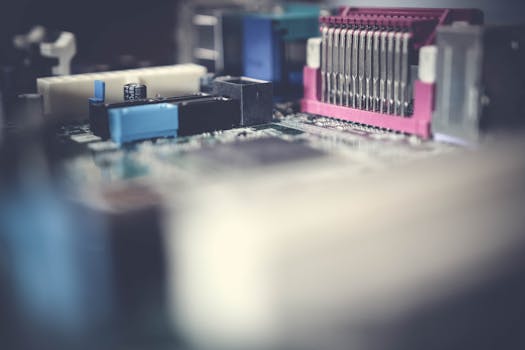 Photo: Pok Rie / Pexels
 Photo: Pachon in Motion / Pexels
 Photo: Nicolas Foster / Pexels