✓ The metaverse is a persistent, interconnected network of 3D virtual worlds.
✓ It aims to converge physical and digital realities through advanced technologies.
✓ Blockchain and NFTs play a crucial role in ownership and digital economies within the metaverse.
✓ Access typically requires VR/AR headsets, but can also be through traditional devices.
How It Works
1
Access Virtual Worlds
Users enter the metaverse through devices like VR headsets, AR glasses, or even standard computers and mobile phones. This provides an immersive or semi-immersive gateway to digital environments.
2
Interact with Avatars and Objects
Within these worlds, users are represented by customizable avatars and can interact with other users' avatars, digital objects, and AI-driven entities. These interactions mimic real-world social and economic dynamics.
3
Participate in Digital Economies
The metaverse often features its own digital economies, powered by cryptocurrencies and NFTs. Users can buy, sell, and trade virtual land, goods, services, and experiences, establishing real value in digital assets.
4
Experience Interoperability and Persistence
A key characteristic is the goal of interoperability, allowing assets and identities to move between different virtual spaces. The metaverse is also persistent, meaning it continues to exist and evolve even when users are offline.
Unpacking the Core Definition: What is the Metaverse Concept?
Photo: Atlantic Ambience / Pexels
To truly grasp what is the metaverse concept, we must move beyond the simple notion of a video game or a virtual reality experience. The metaverse, at its core, represents a persistent, interconnected, and immersive network of 3D virtual worlds. It's not a single destination, but rather a digital continuum where physical and digital realities converge. Imagine a future where your digital identity, your possessions, and your social connections seamlessly traverse various virtual spaces, much like you navigate different websites on the internet today, but with a far greater sense of presence and interaction. This isn't just about viewing content; it's about *being* in the content, experiencing it, and actively participating in its evolution. The vision is to create a parallel digital existence that mirrors and extends our physical lives, offering new avenues for work, education, entertainment, and social engagement. It promises a level of immersion and interaction previously confined to science fiction, where the lines between the digital and the real blur in meaningful ways. This foundational understanding is crucial for appreciating the technological hurdles and the immense potential that lie ahead. It's about a shift from a 2D internet that we browse to a 3D internet that we inhabit. The persistence aspect is vital: unlike a game that resets or ends, the metaverse is always 'on,' continually evolving based on user interactions and programmatic changes. This allows for a sense of history, ownership, and lasting impact within these digital realms. Furthermore, interoperability is a critical, albeit challenging, goal. The idea is that an avatar, an item of clothing, or a digital asset acquired in one metaverse platform could potentially be used or recognized in another. This seamless transition between distinct virtual environments is what truly elevates the metaverse beyond isolated virtual experiences. Without interoperability, the metaverse would remain a collection of walled gardens, limiting its potential as a unified digital universe. The concept also heavily relies on the idea of shared experiences – multiple users co-existing and interacting in the same virtual space in real-time, fostering a sense of community and collective action. This collective presence is what differentiates it from single-player virtual reality experiences, pushing it towards a social and economic platform. Understanding the underlying technologies that enable this vision is key to appreciating its potential impact. It’s not just a technological leap; it’s a paradigm shift in how we interact with information and each other.
The Technological Pillars Supporting the Metaverse Ecosystem
Photo: Atlantic Ambience / Pexels
The realization of what is the metaverse concept is predicated on the confluence of several advanced and evolving technologies. Without these foundational pillars, the metaverse would remain an abstract idea. At the forefront are Virtual Reality (VR) and Augmented Reality (AR). VR headsets, like Meta Quest or Valve Index, provide full immersion, transporting users entirely into digital environments, while AR overlays digital information onto the real world via devices such as smart glasses or smartphone cameras. These technologies are critical for delivering the immersive and interactive experiences central to the metaverse vision. The fidelity and responsiveness of these devices are constantly improving, reducing latency and enhancing the sense of presence. Complementing VR and AR is the robust infrastructure of 5G and future broadband networks. The metaverse demands high bandwidth and ultra-low latency to render complex 3D environments, support real-time interactions among millions of users, and stream high-quality data without lag. The advancements in network capabilities are essential for scaling the metaverse from niche applications to a ubiquitous digital layer. Artificial Intelligence (AI) also plays a pivotal role. AI can power non-player characters (NPCs) with realistic behaviors, generate dynamic content, personalize user experiences, and even facilitate natural language processing for seamless communication within virtual spaces. From intelligent assistants to hyper-realistic digital avatars, AI will make the metaverse feel more alive and responsive to individual users. Blockchain technology and Non-Fungible Tokens (NFTs) are fundamental to the economic and ownership aspects of the metaverse. Blockchain provides a decentralized, transparent, and immutable ledger for verifying ownership of digital assets, such as virtual land, unique collectibles, or avatar wearables. NFTs, built on blockchain, ensure the scarcity and authenticity of these digital items, allowing for true digital ownership and creating vibrant virtual economies. This enables users to buy, sell, and trade digital goods with confidence, mirroring real-world economic principles in a digital realm. Furthermore, advanced graphics rendering engines, like Unreal Engine and Unity, are indispensable for creating the visually stunning and complex 3D worlds that define the metaverse. These engines allow developers to build realistic textures, lighting, physics, and animations, contributing significantly to the immersive quality of the experience. Cloud computing provides the necessary backend infrastructure to host these massive, persistent worlds, handling immense computational demands and data storage for millions of simultaneous users. Edge computing, bringing computation closer to the user, will further reduce latency and enhance real-time interactions. The convergence and continuous evolution of these technologies are what fuel the ambitious promise of a fully functional and expansive metaverse.
Exploring Applications and the Future Impact of the Metaverse
Photo: Michelangelo Buonarroti / Pexels
The potential applications of what is the metaverse concept stretch far beyond entertainment, promising to revolutionize various sectors of our lives. In the realm of work, the metaverse could transform remote collaboration. Imagine virtual office spaces where colleagues from across the globe can gather as avatars, hold meetings in immersive 3D environments, brainstorm on interactive whiteboards, and even conduct training simulations that feel as real as being there. This goes beyond video conferencing, offering a sense of shared presence and spatial understanding that can enhance productivity and team cohesion. For education, the metaverse opens up unprecedented opportunities for experiential learning. Students could explore historical sites as if they were present, conduct complex scientific experiments in a risk-free virtual lab, or learn surgical procedures through highly realistic simulations. This immersive approach can make learning more engaging, accessible, and effective, breaking down geographical barriers to quality education. The retail sector is already experimenting with metaverse applications, offering virtual storefronts where consumers can browse 3D product models, try on virtual clothing with their avatars, and interact with sales assistants in a digital space. This provides a rich, interactive shopping experience that bridges the gap between online and in-store retail, potentially leading to new forms of e-commerce and brand engagement. The entertainment industry is a natural fit, with virtual concerts, immersive cinematic experiences, and entirely new genres of games that blend social interaction with deep narratives. Imagine attending a live concert where you can interact with other fans and even the artists in a virtual stadium, or participating in a role-playing game where your decisions genuinely shape a persistent digital world. Social interaction is another cornerstone. The metaverse offers new ways for people to connect, build communities, and express their identities. From virtual hangouts with friends to participating in global events, it provides platforms for deeper and more varied social engagement than current social media. For instance, individuals with mobility challenges could experience new forms of freedom and interaction in a virtual world. However, the development of the metaverse is not without its challenges. Issues of data privacy, digital ethics, accessibility, and the potential for digital divide need careful consideration. Establishing interoperability standards between different metaverse platforms is also a significant hurdle. Despite these challenges, the trajectory points towards an increasingly integrated digital existence, where the metaverse evolves from a nascent concept into an indispensable layer of our daily lives, transforming how we work, learn, play, and connect. The journey to a fully realized metaverse will be iterative, but its impact is poised to be profound, creating new industries, job roles, and ways of human interaction. Understanding the ethical implications will be just as important as the technological advancements.
Navigating the Metaverse: Tips for Early Adopters and Potential Pitfalls
Photo: SHVETS production / Pexels
As the metaverse begins to take shape, understanding how to navigate its nascent stages and being aware of potential pitfalls is crucial for anyone interested in exploring this new frontier. For early adopters, one of the primary tips is to start small and experiment. You don't need to invest heavily in the most expensive VR gear immediately. Many metaverse platforms are accessible via standard computers or even smartphones, offering a gateway to experience virtual worlds. Platforms like Decentraland, The Sandbox, Roblox, and even VRChat provide diverse experiences, from social hubs to virtual land ownership, allowing you to gauge your interest and comfort level. Another key tip is to prioritize understanding digital identity and security. In a persistent digital world where your avatar represents you, safeguarding your personal information, digital assets (especially NFTs and cryptocurrencies), and privacy settings becomes paramount. Be cautious about sharing sensitive data and always use strong, unique passwords for your accounts. Familiarize yourself with the security features offered by each platform you engage with. It's also wise to engage with communities. The metaverse is inherently social, and joining forums, Discord servers, or in-world groups can provide valuable insights, help you learn the ropes, and connect you with like-minded individuals. These communities often share tips on new experiences, potential opportunities, and best practices for navigating specific platforms. On the flip side, there are several potential pitfalls to be aware of. The first is over-speculation and hype. While the metaverse holds immense promise, it's still in its early stages. Many projects and digital assets are highly speculative, and financial investments should be approached with extreme caution, understanding the high risks involved. Not every virtual land parcel or NFT will yield returns, and many may lose value. Another pitfall is the potential for digital addiction and blurring boundaries between real and virtual life. The immersive nature of the metaverse could lead to excessive screen time and a detachment from physical responsibilities or relationships. Maintaining a healthy balance and setting boundaries for your engagement is vital. Lastly, be wary of scams and malicious actors. Like any new digital frontier, the metaverse can attract bad actors looking to exploit new users through phishing scams, fake NFT projects, or other fraudulent activities. Always verify the authenticity of platforms, assets, and individuals before engaging or investing. By approaching the metaverse with curiosity, caution, and a commitment to responsible digital citizenship, early adopters can enjoy its benefits while mitigating potential risks. Responsible exploration is key to shaping a positive future for this evolving digital universe.
* **Start with accessible platforms:** Begin with metaverse experiences that don't require expensive hardware. Many popular platforms are browser-based or mobile-friendly.
* **Prioritize digital security:** Protect your digital identity, assets, and personal data. Use strong passwords and enable two-factor authentication.
* **Engage with communities:** Join online forums and in-world groups to learn from experienced users and stay informed.
* **Understand the speculative nature:** Be cautious with financial investments in virtual assets; high risk is involved.
* **Maintain real-world balance:** Set clear boundaries for your time in the metaverse to avoid over-engagement.
* **Be vigilant against scams:** Always verify the legitimacy of projects and individuals to avoid fraud.
Comparison
Feature
Metaverse (Vision)
Current VR Games
Traditional Internet
Persistence
Always-on, evolving
Session-based, resets
Always-on (static pages)
Interoperability
Seamless asset transfer
Limited/None
Hyperlinks (content)
Digital Economy
Robust, blockchain-backed
In-game currency, limited
E-commerce (real money)
Immersion Level
High (VR/AR)
High (VR)
Low (2D screen)
Identity
Consistent, customizable avatar
Game-specific avatar
Profile/username
Ownership of Assets
✓ (NFTs)
✗ (In-game licenses)
✓ (Physical/Digital goods)
Real-time Interaction
✓
✓
✗ (Asynchronous mainly)
Decentralization
Goal (blockchain)
✗ (Centralized servers)
Mixed (DNS, centralized platforms)
What Readers Say
★★★★★
"Understanding what is the metaverse concept has genuinely opened my eyes to the future of digital interaction. It's not just hype; the potential for new forms of work and social connection is incredible."
Alex Chen · Seattle, WA
★★★★★
"This article provided a comprehensive and easy-to-understand breakdown of the metaverse. I particularly appreciated the distinction between current VR and the true metaverse vision."
Maria Rodriguez · Austin, TX
★★★★★
"As a developer, grasping what is the metaverse concept is crucial. This piece clearly articulated the technological stack and potential applications, helping me refine my project ideas significantly."
David Lee · New York, NY
★★★★★
"While the metaverse concept is exciting, the article also highlighted important challenges like security and addiction. A balanced perspective that I found very helpful for considering future engagement."
Sarah Miller · Denver, CO
★★★★★
"For someone new to blockchain and VR, this explanation of what is the metaverse concept tied everything together perfectly. I now feel much more informed about where technology is heading."
John Doe · Los Angeles, CA
Frequently Asked Questions
What is the primary difference between the metaverse and virtual reality?
While virtual reality (VR) is a technology that provides immersive experiences, the metaverse is a broader concept representing a persistent, interconnected network of virtual worlds. VR is a tool to access parts of the metaverse, but the metaverse itself encompasses much more, including digital economies, identity, and interoperability across different platforms, often without requiring VR.
Is the metaverse just a fad, or will it truly become mainstream?
The metaverse concept, in its current form, is still evolving and facing significant technological and ethical challenges. However, the underlying technologies and the desire for more immersive digital interactions suggest it has the potential to become mainstream, much like the internet did. Its eventual form and widespread adoption will depend on standardization, accessibility, and real-world utility.
How can I experience the metaverse today?
You can experience early iterations of the metaverse through various platforms. Popular examples include virtual world platforms like Decentraland and The Sandbox, social VR applications like VRChat and Meta Horizon Worlds, and gaming platforms such as Roblox and Fortnite, which are increasingly incorporating metaverse-like features. Many can be accessed via PC, mobile, or VR headsets.
Will accessing the metaverse be expensive?
Initial access to some metaverse experiences might require investments in VR/AR hardware, which can be costly. However, many platforms offer free or low-cost entry points via computers or smartphones. The long-term vision aims for broad accessibility, though participation in advanced digital economies (e.g., buying NFTs or virtual land) can involve significant financial outlay based on market value.
How does the metaverse compare to existing social media platforms?
The metaverse aims to offer a far more immersive and interactive experience than traditional 2D social media. Instead of simply viewing profiles and posts, users can actively 'be' in a shared virtual space, interact with others through avatars, and engage in activities that mimic real-world interactions, fostering a deeper sense of presence and community.
Who should be interested in what is the metaverse concept?
Anyone interested in the future of technology, digital commerce, social interaction, education, and entertainment should pay attention to the metaverse concept. This includes tech enthusiasts, developers, investors, educators, artists, businesses looking for new customer engagement channels, and individuals curious about how digital worlds will reshape our lives.
What are the biggest security risks in the metaverse?
Major security risks include data privacy breaches, identity theft (of avatars and digital profiles), financial scams involving cryptocurrencies and NFTs, and the potential for new forms of cyberbullying or harassment in immersive environments. Robust security protocols, user education, and decentralized identity solutions are crucial for mitigating these risks.
What future trends will accelerate metaverse development?
Key trends include advancements in VR/AR hardware (lighter, cheaper, higher fidelity), widespread adoption of 5G and next-gen internet, further development of AI for realistic interactions, increasing mainstream understanding and adoption of blockchain/NFTs, and the continuous growth of creator economies within virtual spaces. Interoperability standards will also be critical.
Understanding what is the metaverse concept is the first step towards engaging with the next evolution of the internet. Dive deeper into its potential, prepare for its challenges, and discover how this interconnected digital universe will redefine our future interactions. The journey into the metaverse has only just begun.
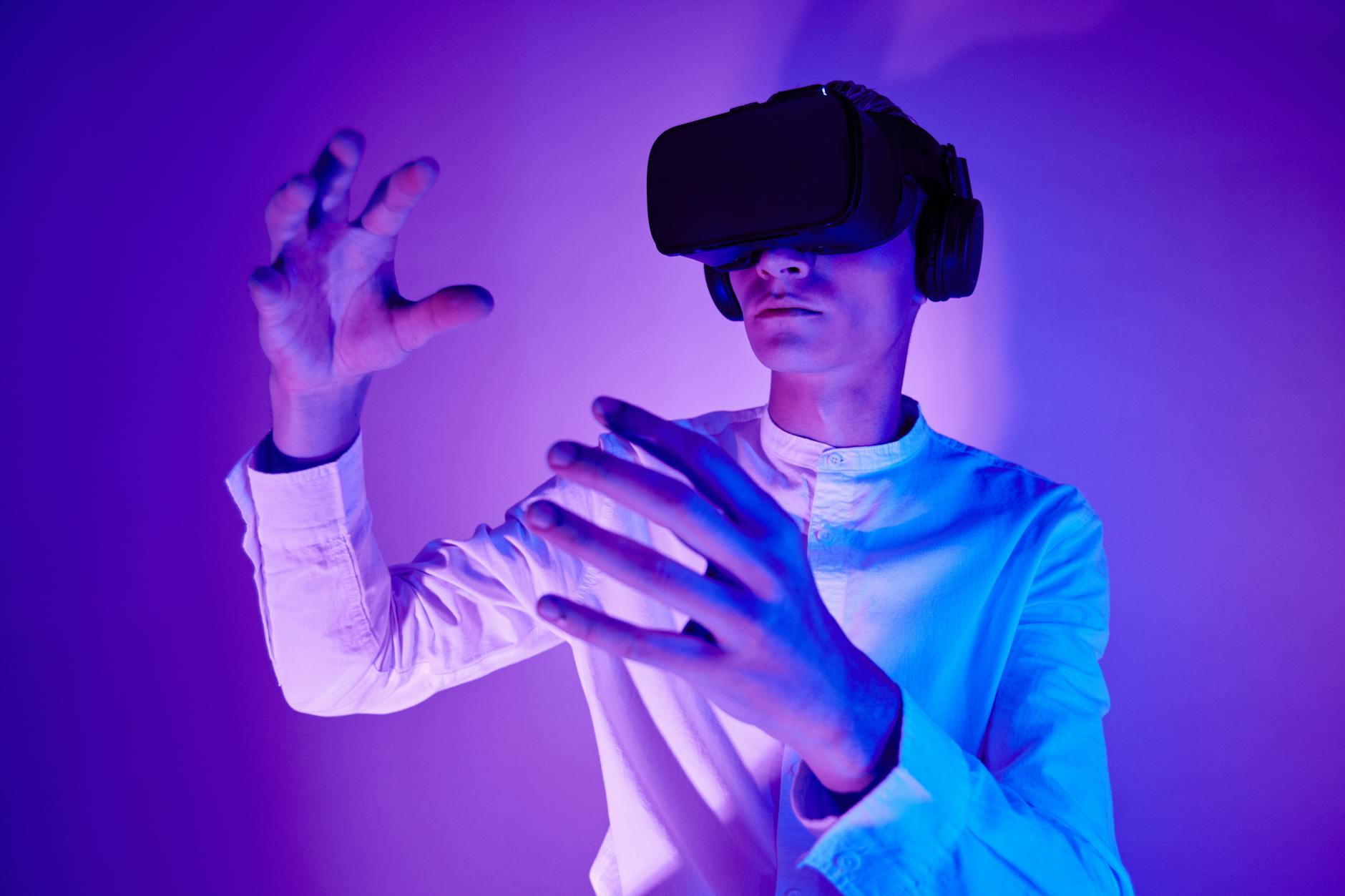
 Photo: Atlantic Ambience / Pexels
 Photo: Atlantic Ambience / Pexels
 Photo: Michelangelo Buonarroti / Pexels
 Photo: SHVETS production / Pexels